
How to Choose Multi-Pendant Lights for Dining Tables & Kitchen Islands
Choosing the right multi pendant light is not only about style. Over a dining table or kitchen island, the number of pendants, their size, spacing, and hanging height all affect how the room looks and how well the surface is lit.
A single pendant can work over a small table, but it often feels undersized over longer surfaces. That is why many homeowners choose a multi light pendant or a row of pendants instead. This type of lighting spreads illumination more evenly, creates a stronger focal point, and helps the space feel more finished.

Why a Multi Pendant Light Works Better Over Long Surfaces
A multi pendant light works especially well over long dining tables and kitchen islands because it gives better visual balance and better light coverage. With one central fixture, the middle may be bright while both ends stay dim. With multiple pendants, the light is distributed across a wider area, which is more practical for dining, serving, or food prep.
This matters even more when choosing pendant lights for kitchen island spaces. In many homes, the island is used for prep work, casual meals, and everyday gathering, so even lighting is just as important as appearance.

How Many Pendants Do You Need?
2 Pendants for Smaller Tables or Compact Islands
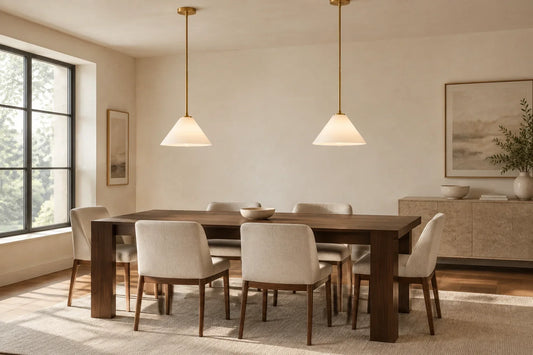
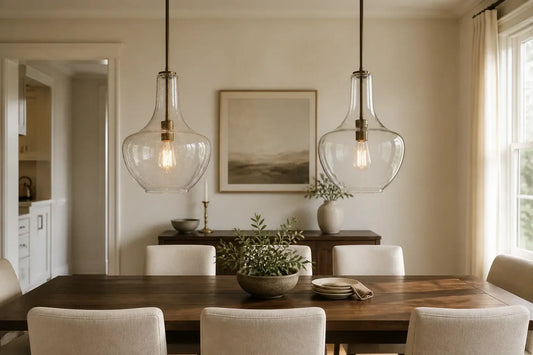
Two pendants usually work best over surfaces around 4.5 to 6 feet (about 1.4 to 1.8 meters) long. This layout feels simple, clean, and symmetrical. If your island is narrow or your dining table is not very large, two pendants are often enough.

3 Pendants for Most Standard Spaces
Three pendants are the safest choice for many homes. They usually suit tables and islands around 6 to 8 feet (about 1.8 to 2.4 meters) long. If you are not sure where to start, this is often the easiest multi light pendant setup to get right.

5 or More Pendants for Large Islands or Long Tables
If your surface is over 8 feet (about 2.4 meters) long, five or more pendants may be a better fit. This kind of layout works best in larger open-plan spaces where the lighting is meant to be both functional and visually striking.

Quick Size Guide
- 4.5 to 6 feet (about 1.4 to 1.8 meters): usually 2 pendants
- 6 to 8 feet (about 1.8 to 2.4 meters): usually 3 pendants
- Over 8 feet (about 2.4 meters): consider 5 or more pendants
Dining Table vs. Kitchen Island: The Lighting Goals Are Different
Over a Dining Table
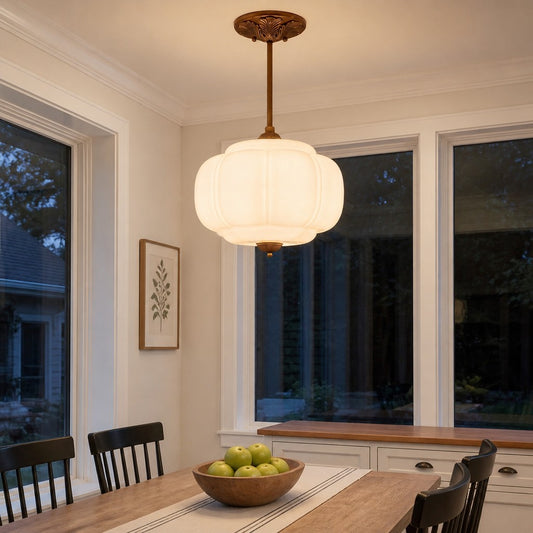
The goal is comfort and atmosphere. A warmer light, around 2700K to 3000K, usually feels best for dining. In most homes, the bottom of the fixture should hang about 28 to 36 inches above the table (about 70 to 90 cm).
Over a Kitchen Island
The goal is clearer task lighting. That is why pendant lights for kitchen island areas usually work well with 3000K to 4000K, depending on how bright and crisp you want the space to feel. A common hanging height is 30 to 36 inches above the countertop (about 75 to 90 cm).
 |
 |
Size and Spacing Guidelines
Getting the proportions right matters more than most people expect. Even a beautiful fixture can look wrong if the scale is off.
Keep the Full Span Balanced
As a rule of thumb, the total width of the pendants should cover about two-thirds of the table or island length. This usually looks balanced without feeling too crowded.
Space Pendants Evenly
For most layouts, pendants should be spaced about 24 to 30 inches apart from center to center (about 60 to 75 cm). A simple shortcut is to keep the spacing close to the diameter of each pendant.
Leave Room at the Ends
The outer pendants should not sit too close to the edge. Try to leave about 6 to 12 inches from the edge of the surface to the center of the end pendants (about 15 to 30 cm).

When Cluster Pendant Lighting Makes Sense
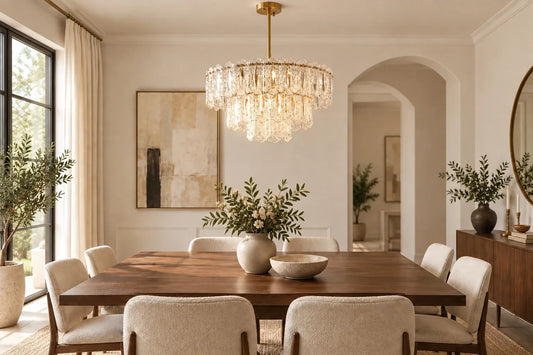
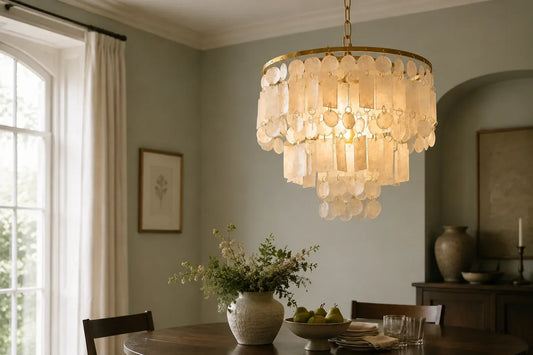
Not every multi-pendant design needs to be arranged in a straight line. Cluster pendant lighting can work well when you want a softer, more decorative look, especially over a round dining table or in a space where the fixture is meant to feel more sculptural.
That said, for long counters, a more linear arrangement is often the better choice. Over an island, a straight row usually gives more even coverage than cluster pendant lighting, which is often stronger on mood than on task performance.

Which Styles Work Best?
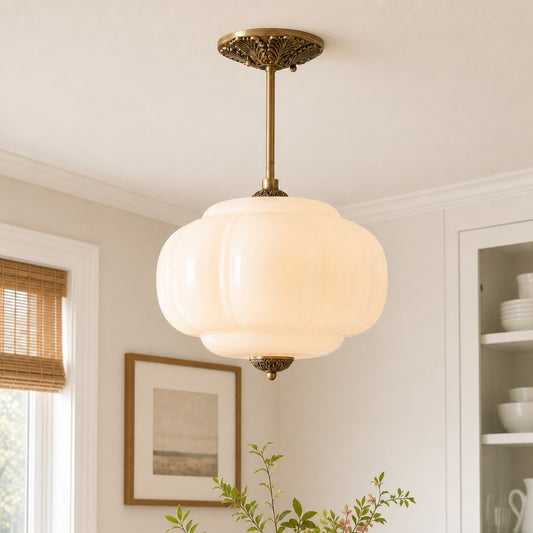
The right style depends on both your room and the surface below. Clean geometric shades work well in modern interiors, while rounded glass pendants can soften the look of a dining area. Slim profiles often feel lighter over islands, especially in kitchens where you want the space to stay open and airy.
If you are comparing finishes and silhouettes, it helps to browse several options side by side. You can explore more styles in our Multi-Version Pendants collection, which includes designs that work well over both dining tables and kitchen islands.
 |
 |
Common Mistakes to Avoid
- Choosing too many pendants for a short surface
- Hanging pendants too high, which weakens the visual effect
- Hanging them too low, which can block sightlines
- Treating dining tables and kitchen islands as if they need the same lighting approach
- Picking a fixture for looks alone without checking scale, spacing, and light coverage
Final Thoughts
If you want an easy starting point, use 2 pendants for smaller surfaces, 3 pendants for most standard tables and islands, and more only when the surface is long enough to support them. Once the layout is right, the fixture will look better and work better every day.
If you are still deciding which style fits your space, explore our Multi-Version Pendants collection for more inspiration, including options for dining areas, decorative cluster looks, and practical pendant lights for kitchen island setups.

Tags:
Previous
Glass Wall Sconces: Soft Light for Sophisticated Spaces
Next
Why Fabric Lighting Creates a Softer, Cozier Home