
Glass texture / A practical comparison
Fluted glass and ribbed glass are often overlapping names for glass with repeated linear grooves or ridges. Neither label guarantees a particular brightness, softer light, or decorating style. The useful comparison is between the actual shades: their profile, transparency, thickness, and light source.
For your room, start with what the fixture needs to do. Then use close-up photos and specifications to choose the texture, glare control, size, and brightness that support that job.
What Is Fluted Glass?
In lighting, fluted usually describes a glass surface with repeating channels, often running vertically along a cylinder or shade. Those lines break up reflections and give the fixture a rhythmic outline. Clear, tinted, and opaque versions can all have this texture; fluted does not automatically mean clear.
Browse the Fluted Glass Lighting collection by shape and finish, then inspect the individual shade. For example, the Emeran Minimalist Cylindrical Fluted Glass Wall Sconce offers Clear and Milk glass options. That opacity choice matters more to bulb visibility than the word fluted.
What Is Ribbed Glass?
Ribbed describes glass with a repeating ridge pattern. Retailers may also call similar surfaces fluted or reeded. These are useful browsing terms, but they are not standardized lighting performance categories.
There is a concrete example within Merge Lighting: Emeran has "Fluted" in its product title, "ribbed cylindrical glass" in its description, and appears in the Ribbed Glass Lighting collection. The names overlap even on the same fixture. Ask for a close-up if two listings look similar instead of assuming they use fundamentally different glass.
Visual Differences
Compare the spacing and curve of the lines, the shade silhouette, and how much of the bulb remains visible. Closely spaced lines create a fine texture; broader, more pronounced contours can make the pattern easier to notice. The product name alone does not establish which profile you will receive.


| Fluted Glass | Ribbed Glass |
|---|---|
| Typical descriptionRepeated channels, often vertical on lighting shades. | Typical descriptionRepeated ridges; often used for the same linear texture. |
| Visual checkInspect line spacing, contour, opacity, and shade shape. | Visual checkInspect the same details; the name does not guarantee deeper ribs. |
| Light behaviorDepends on glass composition, thickness, profile, finish, and source. | Light behaviorDepends on those same variables; not inherently dimmer or softer. |
| CleaningCheck whether the textured surface is accessible and the shade removable. | CleaningCheck groove access and removal instructions, not the label. |
| Modern roomsSimple cylinders and restrained hardware can complement clean lines. | Modern roomsThe same approach works; ribbed does not mean farmhouse only. |
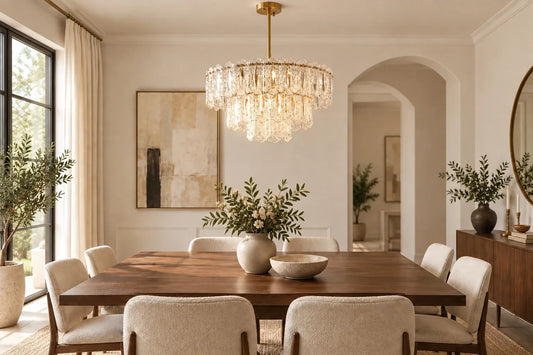
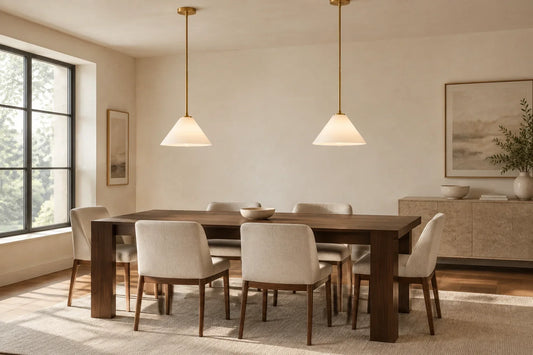
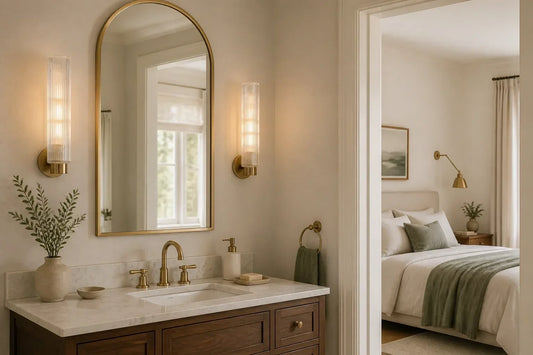
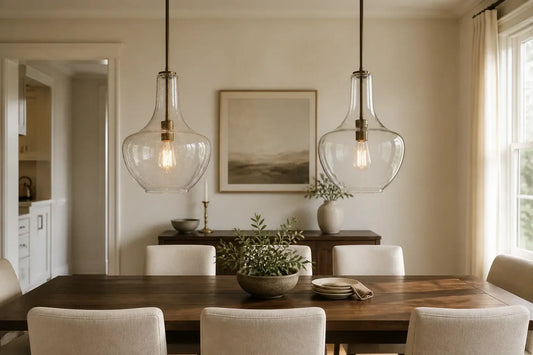
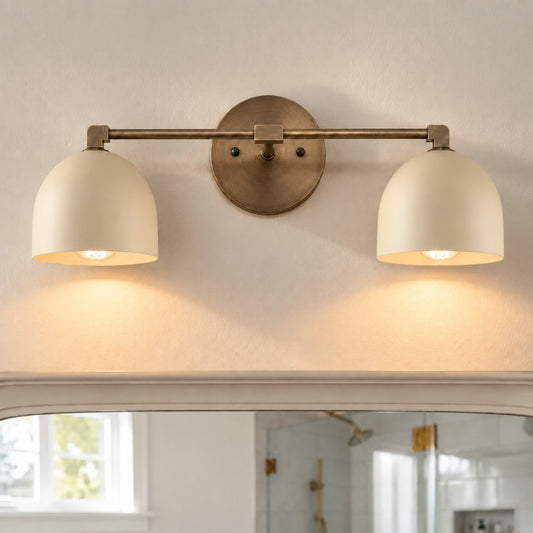
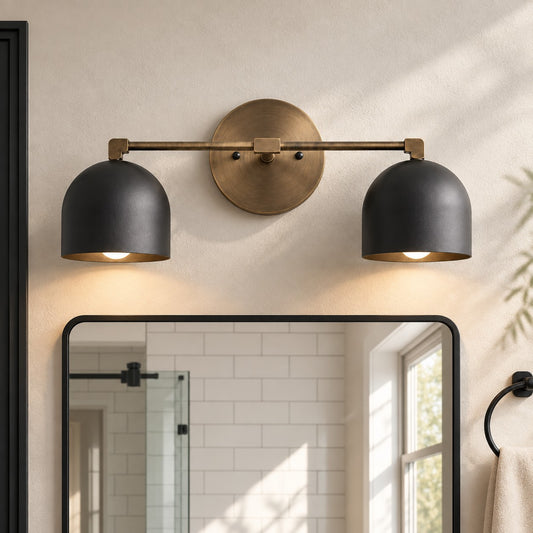
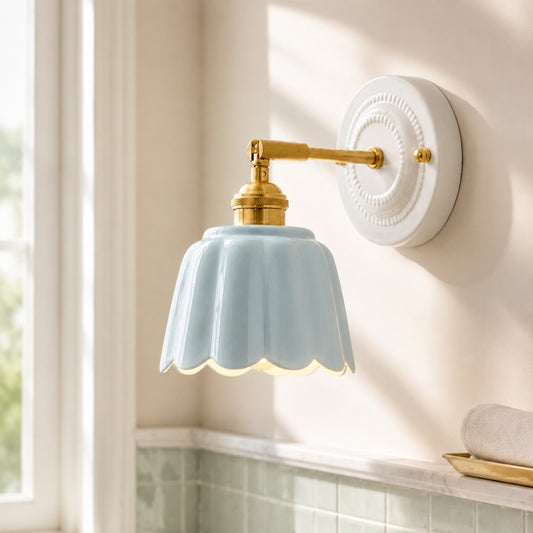
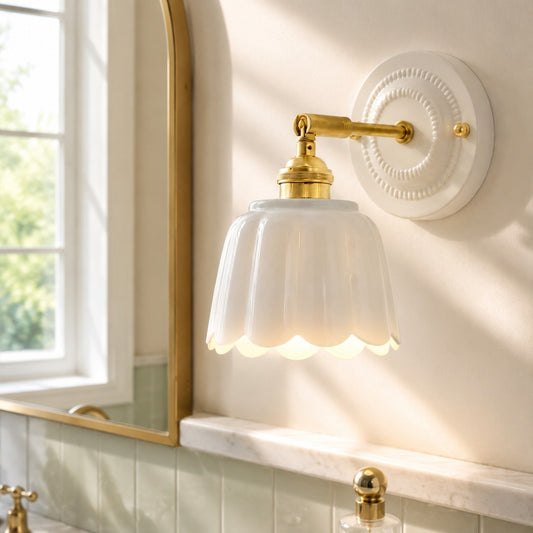
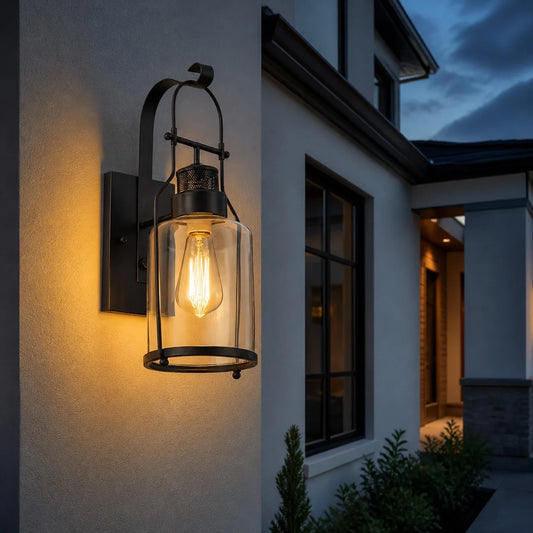
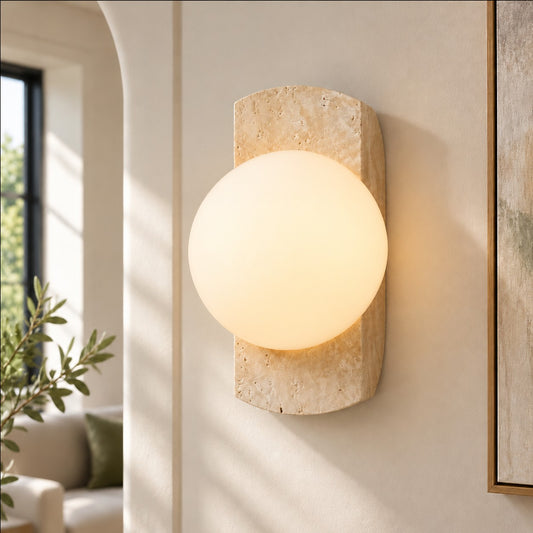
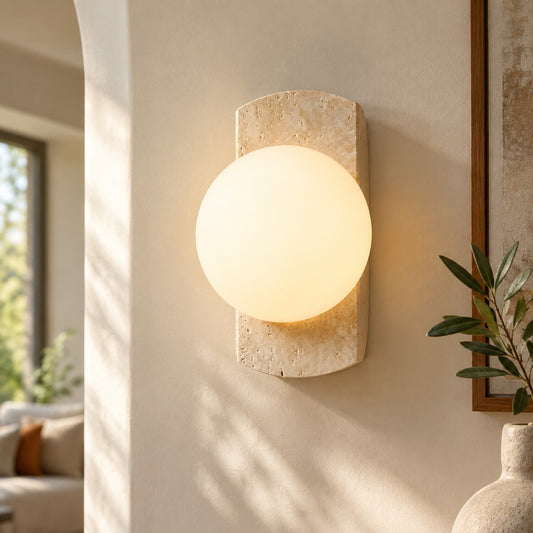
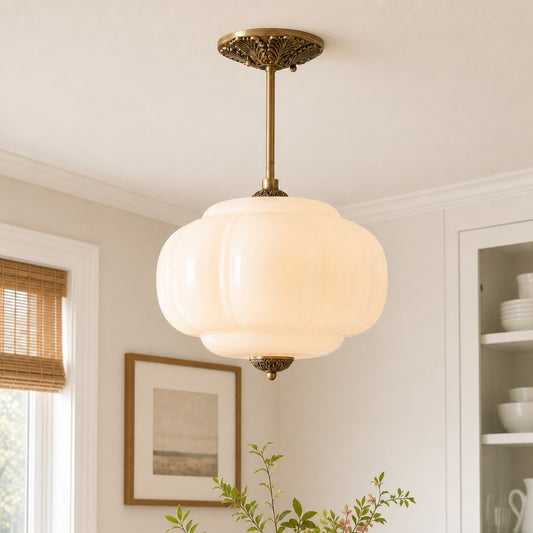
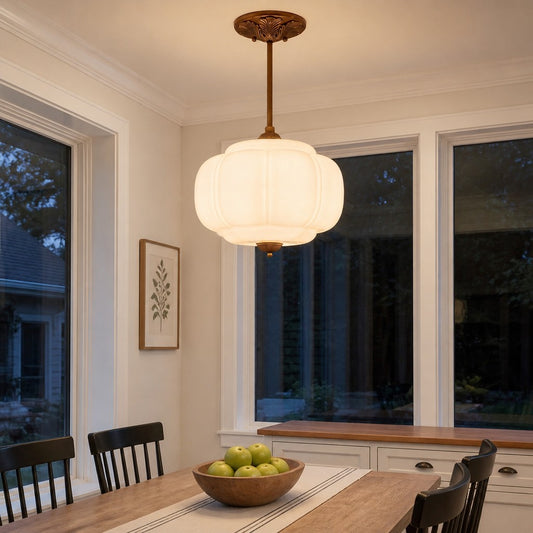
Photo evidence: the body images are taken from the linked store product listings. They support observations about shape, texture, and placement. Different exposures, bulbs, and rooms make them unsuitable for measuring relative brightness. The separately generated cover is an illustrative interior, not a light-performance test.
Differences in Light Diffusion
Clear textured glass bends and redirects light, which can create highlights and patterned reflections. That is different from the more uniform scattering associated with frosted or opal glass. Clear ribs may distort a filament without hiding its bright point, so texture alone does not guarantee comfortable glare control.
Glass thickness, texture depth, and the bulb all affect the result. Thickness changes the optical path; the contour and depth change how light is redirected. Neither "thicker" nor "deeper" reliably means softer. These product listings do not provide comparable thickness, groove-depth, or transmission measurements, so a numerical ranking would be misleading.
The bulb adds another layer: lumen output, frosted versus clear envelope, filament placement, and color temperature can change the experience within the same shade. For an E26 fixture such as Emeran, compare permitted bulb dimensions and ratings before selecting a source. A frosted bulb may reduce filament contrast, but it cannot correct poor placement by itself.

Which Is Easier to Clean?
The easier shade is the one you can safely reach and wipe. Accessible, shallow grooves generally take less effort than narrow recesses. A smooth outer surface may be straightforward to clean even when the inner surface is textured. Neither naming convention tells you where that texture sits.
Turn the fixture off and let it cool. Follow its care instructions, dust gently with a soft brush or microfiber cloth, then use a lightly dampened cloth if permitted. Do not spray installed sockets or LED components, use abrasive pads, or remove glass without checking how it is secured. Dry the surface to reduce streaks.
Before ordering a pendant over an island, consider cooking residue and access from a stable step platform. With the Crosby Ribbed Glass Pendant, ask how the shade is removed and supported during cleaning; an attractive open-looking shade should not be assumed to lift off without tools.
Which Works Better in Modern Interiors?
Both can work. The overall shape, glass opacity, metal finish, and amount of surrounding detail are more useful style guides. Match a slim cylinder to strong vertical lines, or use a rounded shade to soften flat cabinetry. Repeat one hardware finish to make the choice feel intentional.
Rowena's gray glass and gold arm offer a more decorative outline. Emeran's clear or milk cylinder lets you choose between visible depth and a more solid-looking shade. Judge both with the light off, when the fixture becomes part of the room's daytime composition.
Keep texture selective: a ribbed light beside smooth stone and plain cabinetry can read clearly. Against deeply fluted cabinets or busy tile, use quieter hardware and consider opaque glass to reduce competing detail.
Best Fixture Types for Each
Neither texture name belongs exclusively to one fixture type. Choose the form around the available space and lighting task, then compare the actual glass.


Pendants: Crosby uses replaceable E26/E27 bulbs, sold separately. Its listing states dimmer compatibility; choose a compatible dimmable bulb and control. Check shade size, suspension, and permitted wattage before ordering a row.
Wall sconces: Kelila offers one-, two-, and three-light arrangements using E12 bulbs, sold separately. The one-light version is listed at 5 inches wide, 5 inches deep, and 9 inches high. Verify the selected variant against mirror doors and circulation space.
Flush mounts: Etta is listed at 11.8 inches in diameter and 5 inches high with a G9 base. Its compact form can suit a hall where a pendant would hang too low; confirm the chosen bulb and overall light output separately.
How to Choose
Choose a room function first, then decide how much useful light and control it needs. Rated bulb lumens do not tell you how much light reaches a face, page, or countertop after the shade and placement are considered.
Bathroom: clear, even task light
Prioritize light on the face without a bright source reflected into the eyes. Compare paired Emeran sconces and the available Kelila arrangements against your wiring. Confirm the exact damp or wet location rating and placement with an electrician; a bathroom photo is not certification.
Bedroom: low ambient light
The Siahna LED Tube Sconce lists 400 lumens, 2700K, and non-dimmable operation. Consider it for warm ambient light, with a separate reading source if needed. If adjustable bedtime brightness is essential, choose a fixture with verified dimming support.
Kitchen: brighter working surfaces
Use Crosby pendants as part of layered lighting, alongside task lighting where shadows remain. Test the bulb sightline from a stool and specify compatible dimming for the shift from preparation to dining.
Hall or living room: comfortable fill
Consider an opal Etta flush mount for a compact luminous form. Supplement it where the room needs more light; an opaque shade describes appearance, not guaranteed coverage.

Your final check: compare close-up and unlit photos, request missing glass details, tape out full dimensions, confirm bulb or LED specifications, and verify controls and location suitability. If comparing samples, use the same source and viewing position. Choose the fixture that serves your room, even if the retailer uses both names for its glass.
Once you have chosen the glass, use our guide to ribbed glass wall sconces in bathrooms and bedrooms to plan the wall layout.
Find the Texture That Fits Your Room
Compare clear, tinted, and opal shades across both collections, then check the specifications of your favorite fixture. Explore more lighting for a coordinated room.
Tags:
Previous
How High Should Pendant Lights Hang Over a Dining Table or Kitchen Island?
Next
How to Choose Brass and Metal Light Fixtures for Your Home?