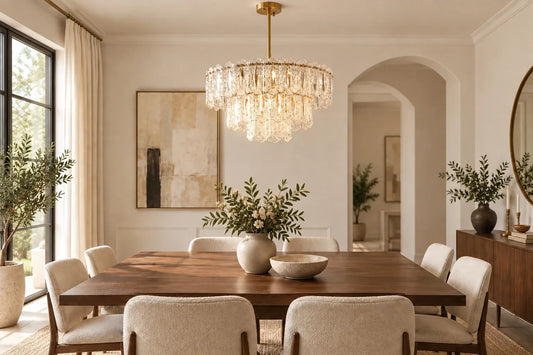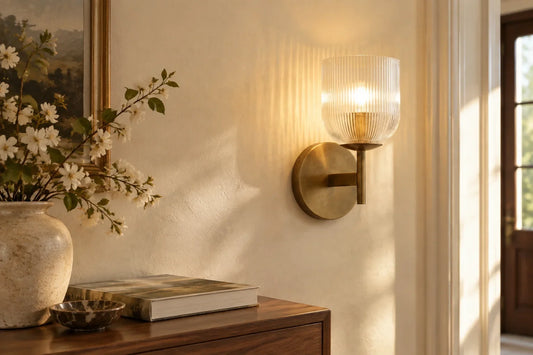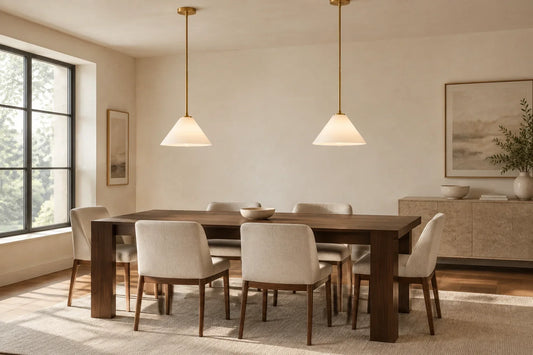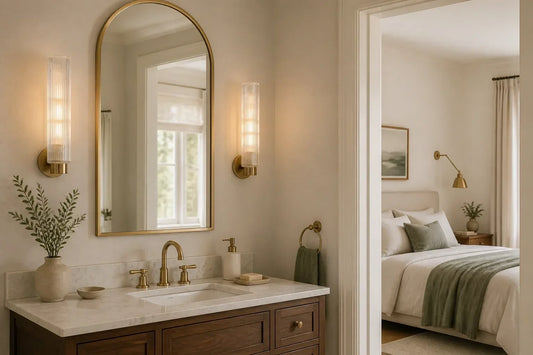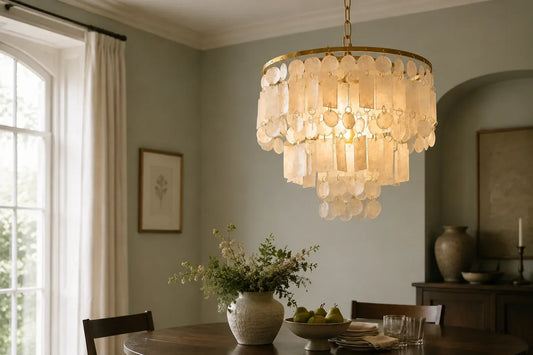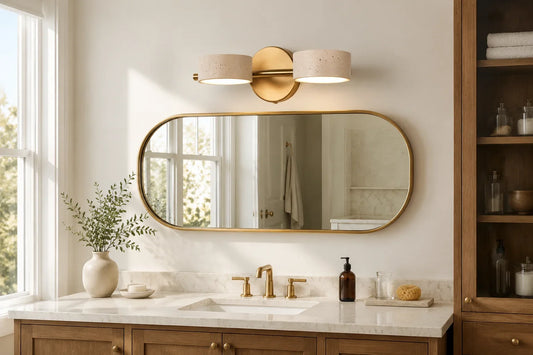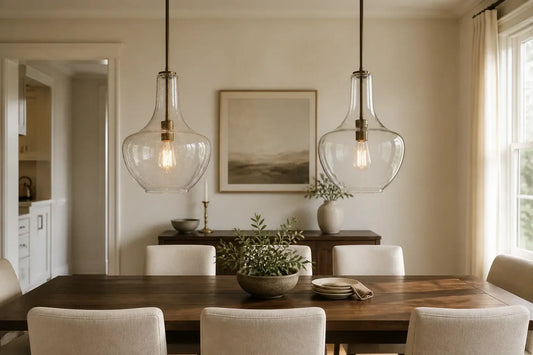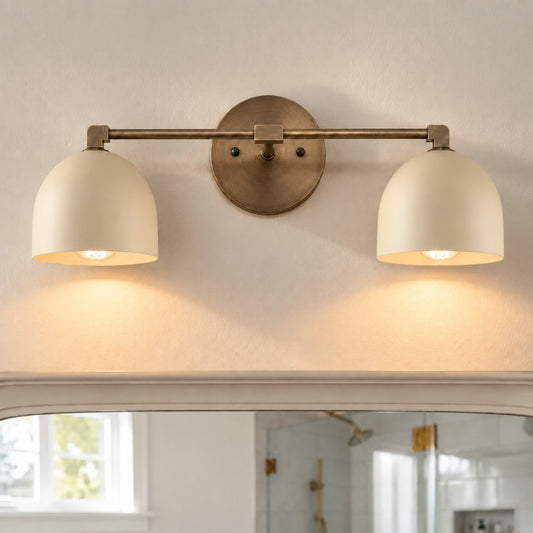
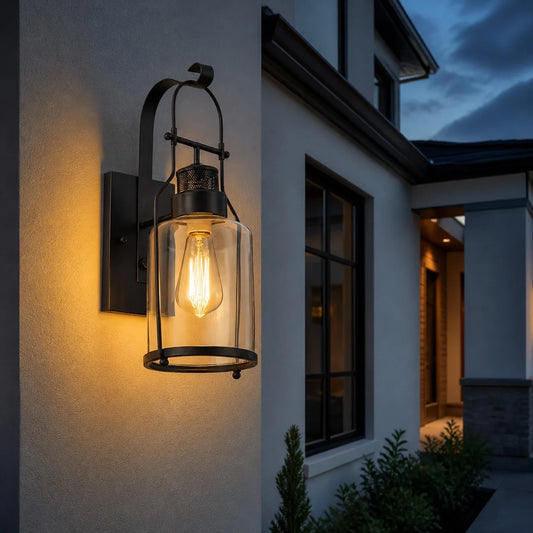
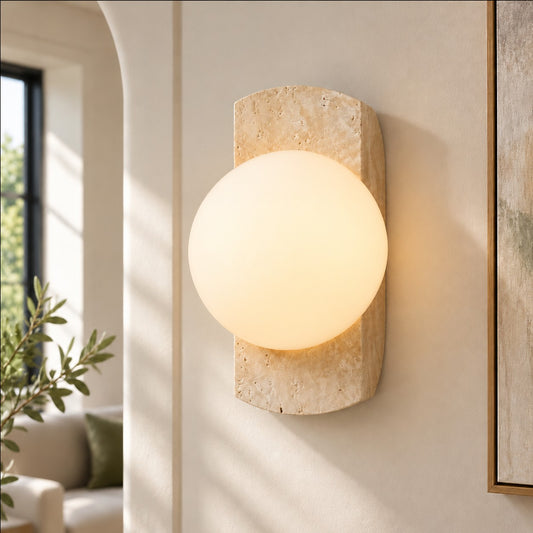
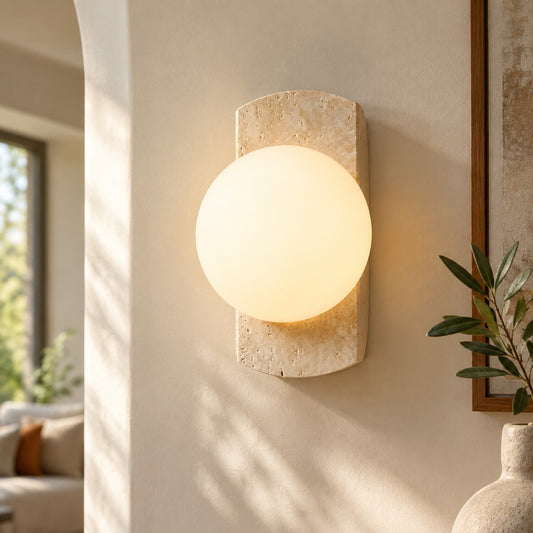
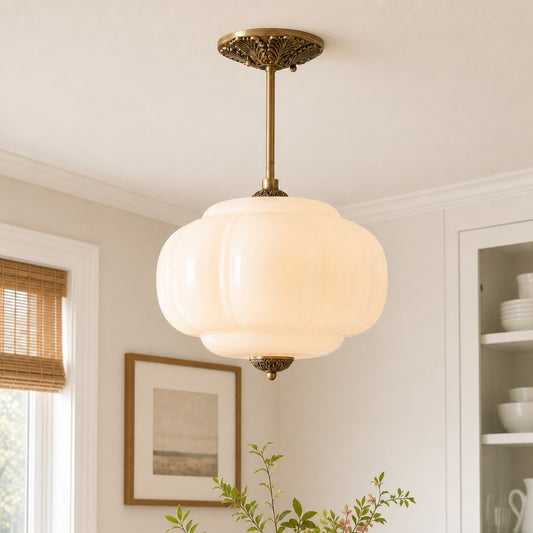
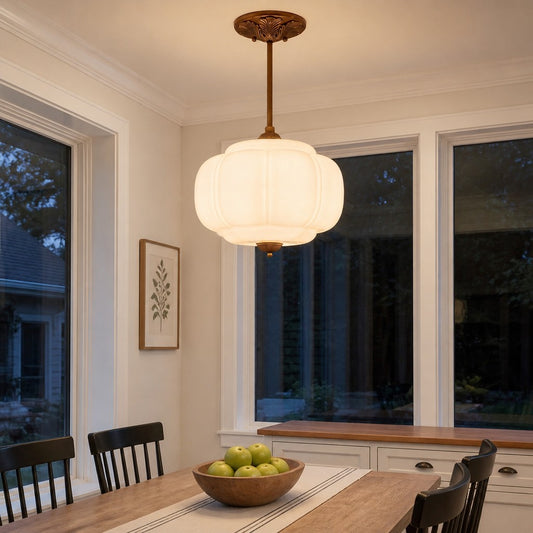

Choose brass and metal light fixtures by deciding how much shine, warmth, and visual contrast the room needs, then checking how the finish is made and maintained. Polished metal is crisp and reflective; antique, aged, brushed, or raw finishes feel softer and more textured. You do not need every metal in a room to match. Repetition, proportion, and a clear dominant finish matter more than perfect uniformity.
Common Metal Finishes
The finish changes how a fixture reads almost as much as its shape. Brass brings yellow-gold warmth. Chrome and polished nickel reflect their surroundings and create a cleaner, brighter edge. Black makes the outline of a fixture more visible, while brushed finishes scatter reflections and tend to look quieter.
| Finish | Visual effect | Choose it when... |
|---|---|---|
| Polished brass | Bright, reflective, formal | You want the light to behave like jewelry in a restrained room. |
| Aged or antique brass | Muted, warm, softly varied | You want character without a high-shine focal point. |
| Raw brass | Living finish that can deepen and patinate | You welcome visible change and natural variation. |
| Chrome or polished nickel | Cool, crisp, highly reflective | The room has clean lines, cool stone, or stainless appliances. |
| Black | Graphic, grounding, high contrast | You want to define the fixture silhouette or connect dark details. |

Polished vs. Antique Brass
Polished brass catches highlights and draws attention to edges. It suits rooms where the fixture should feel precise and decorative. Antique brass absorbs more light, so the same form appears calmer and slightly heavier. It is often easier to place beside timber, warm paint, vintage furniture, and textured stone.
Look beyond the name. “Antique,” “aged,” and “brushed” are not universal formulas. A product page should tell you whether the surface is solid brass, plated, lacquered, sealed, or intentionally left raw. For example, Merge Lighting describes the Jorja Antique Brass option as aged solid brass with a lacquer seal, while its raw-brass guidance says the unfinished surface will age and develop a patina.
Quick test: Hold a glossy gold object and a muted brass sample beside the room’s largest fixed finishes in daylight. If the shiny sample becomes the first thing you see, choose it only when that emphasis is intentional.
How Brass Changes a Room
Brass visually warms cool materials and enriches warm ones. Against white plaster or pale stone, it adds a measured glow. With walnut and rust tones, it feels layered and enveloping. In a dark room, a small amount of brass breaks up heavy surfaces without removing their depth.
Scale controls the effect. A slim brass arm is an accent; a broad metal shade or multi-light chandelier becomes part of the room’s color story. The Miro aged-brass wall sconce, for example, spreads the finish across three arms and shades, so it reads as a deliberate feature rather than a tiny metallic detail.

Matching Finishes With Hardware
Exact matching is optional. Start by naming one dominant metal, one supporting metal, and any fixed metal you cannot change. Repeat the dominant finish at least twice across the sightline, but vary the objects: a brass light can relate to cabinet pulls or a mirror frame without copying them exactly.
Match undertones
Yellow brass sits naturally with warm woods, cream, terracotta, and warmer marbles. Chrome and polished nickel fit more easily with cool gray, blue, and stainless steel.
Match the level of polish
A muted antique-brass light and satin hardware can feel coordinated even when their colors differ. Pairing mirror-polished hardware with heavily aged metal creates a sharper contrast.
View samples vertically and horizontally. Hardware on a cabinet catches light differently from a ceiling fixture, so identical finishes may not look identical in the room.
Mixing Brass With Black or Chrome
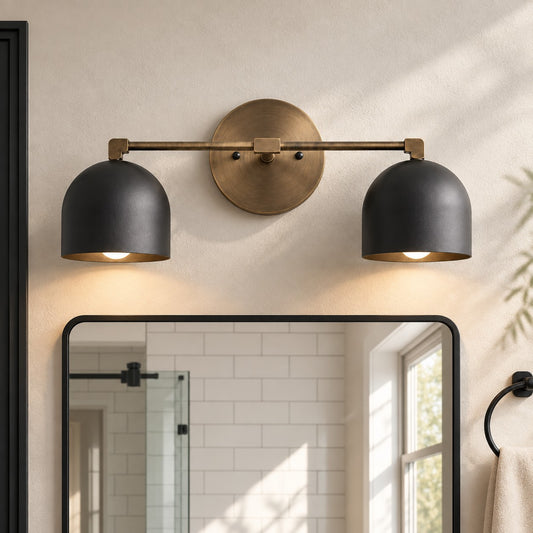
Brass and black is the easier high-contrast pairing: brass supplies warmth while black outlines the architecture. Use black on larger or repeated elements and brass on the focal light, or reverse the ratio in a light, minimal room. The Airen ceiling light is available in Brass, Brass/Black, Black, and Chrome/Black, showing how a two-tone finish can bridge both metals in one object.

Brass and chrome feels brighter and more tailored. Keep their shapes or polish levels related, and let one dominate. The Jorja ceiling light offers both Brass and Chrome within the same form, while the Nael wall sconce spans Raw Brass, Sealed Brass, Polished Nickel, and other choices. These ranges make it easier to compare finish character without changing silhouette.
Kitchens and Bathrooms
In kitchens, coordinate the light with the broadest visible surfaces before worrying about every handle. Brass can warm white cabinetry and stone; black can connect window frames, stools, or an appliance face. Above an island, judge the fixture both switched on and off because a metal shade remains visually prominent all day.

Bathrooms introduce moisture, fingerprints, cleaning sprays, and stricter placement requirements. First confirm that the exact fixture and installation location meet the applicable local electrical and damp-location requirements; a room label or product style is not enough. Then choose a finish whose care level suits the household.
The Nael two-light wall sconce is a useful finish-comparison example because the listing includes Black, Raw Brass, Sealed Brass, Brushed Nickel, Polished Nickel, Antique Brass, and Rose Gold. Its finish range lets you choose the visual relationship to faucets and mirror hardware while keeping the light’s form consistent.

Cleaning and Care
Switch off the fixture and let bulbs cool before cleaning. Dust with a clean, soft, dry cloth. Avoid abrasive pads and do not spray cleaner directly onto the light; liquid can mark a finish or reach electrical parts. For fingerprints, follow the product maker’s instructions rather than assuming a household metal polish is suitable.
Know which surface you own:
- Raw brass is intended to change. Handle it with gloves during installation if you want even aging.
- Sealed or lacquered brass is designed to resist or slow tarnish. Abrasive polish may damage the coating.
- Powder-coated black generally needs gentle dusting, not metal polish.
- Chrome or polished nickel shows fingerprints readily; use a soft cloth and the maker’s approved method.
Merge Lighting provides a dedicated material care guide. Check it alongside the exact product instructions, especially when a listing distinguishes raw, sealed, and antique finishes.
FAQs
Does brass lighting have to match cabinet hardware?
No. Aim for a repeated relationship rather than an exact match. Similar warmth or sheen can unify slightly different finishes, while one clearly dominant metal prevents the room from feeling accidental.
Is antique brass the same as raw brass?
No. Raw brass is unfinished and can develop a natural patina. Antique brass is a visual finish; on the Jorja listing, it is described as aged solid brass with a lacquer seal. Always check the individual product description.
Can you mix brass and chrome in one room?
Yes. Choose one as the dominant finish, repeat the other in a smaller dose, and relate them through shape or sheen. The pairing is clearest when it looks intentional across the whole sightline.
Is brass suitable for bathroom lighting?
The finish alone does not determine suitability. Confirm the exact fixture’s required electrical and damp-location rating for the intended position, then consider whether the surface is raw, sealed, plated, or lacquered.
Will every brass finish develop a patina?
No. Raw brass is expected to change, while sealed, lacquered, or plated finishes are made to retain their appearance for longer. Care products that suit one surface may harm another.
Bring the Right Metal Finish Home
Now that you know how polished, aged, raw, black, and chrome finishes behave, compare real fixture shapes and finish options together. Check the selected variant and care details before ordering.
Tags:
Previous
Fluted Glass vs. Ribbed Glass Lighting: What's the Difference?
Next
Dining Room Chandelier Size Guide: How to Choose the Right Diameter and Height