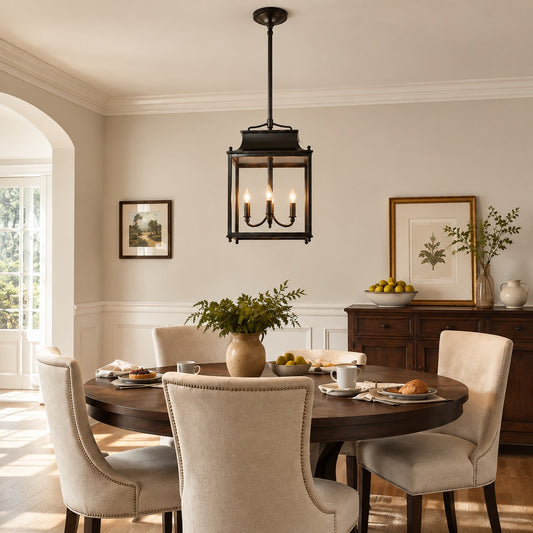
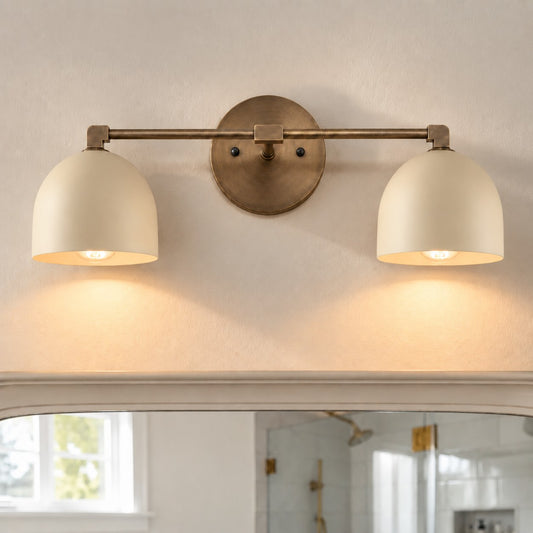

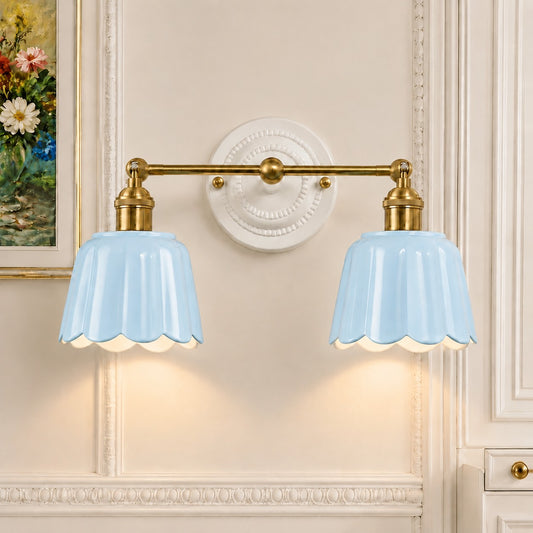
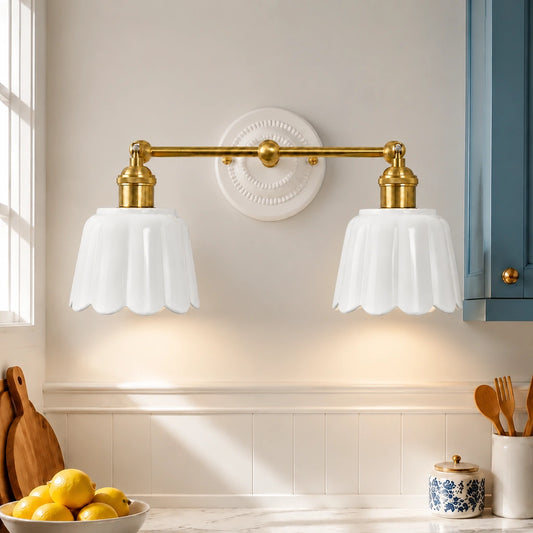
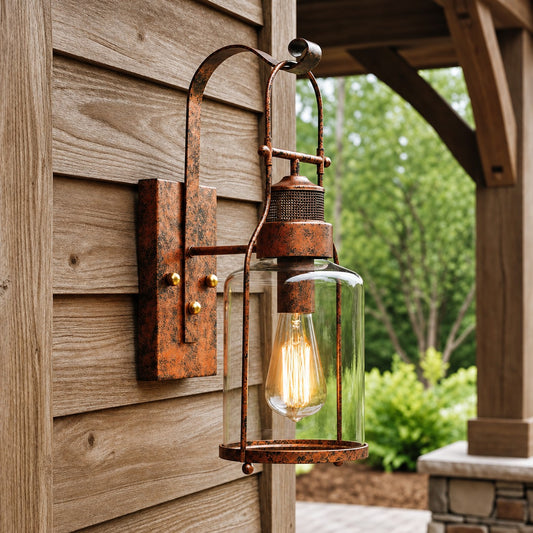
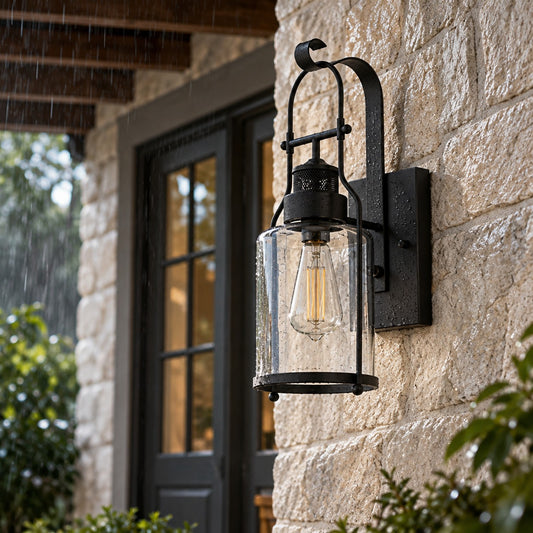
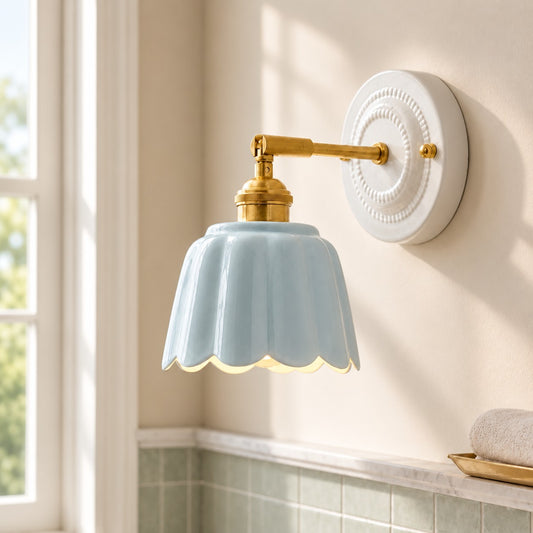
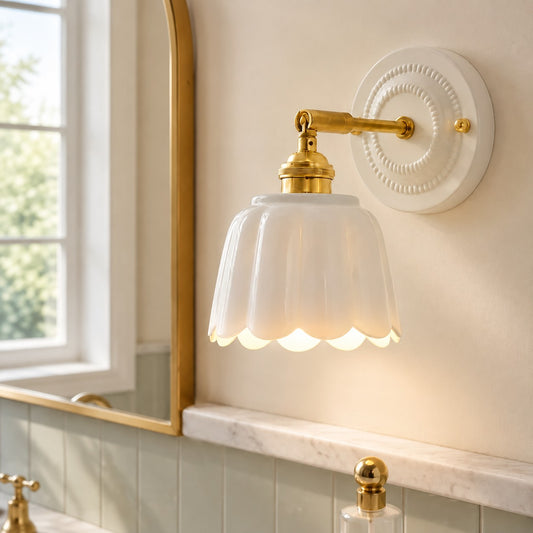

A glass light is not finished when the shade cools. It is finished when thickness, texture, finish, and room placement decide how the fixture glows at home.
Merge Lighting glass fixtures start with material decisions that control light: clear glass reveals the source, ribbed and hammered surfaces break highlights into movement, and milk or opal glass softens contrast. Choose the glass by the effect you want in the room, then confirm scale, finish, and care against the product listing.
Why glass is the first decision
Style labels come later. Material comes first. On Merge Lighting's materials story, glass is described by what it does to light: reveal, diffuse, or break reflection into texture. That is why two pendants with similar silhouettes can feel completely different once they are switched on.
Glass also holds heat and optical depth more cleanly than many look-alike plastics. Edge quality, wall thickness, colour, and surface treatment decide whether the bulb stays crisp, softens into a luminous volume, or throws patterned highlights across a table or island.
Browse the full glass lighting collection with that filter in mind: not which shape is pretty, but which glass behaviour matches the room.
What making really changes
In the workshop sense, glass lighting is a sequence of controlled choices. Molten glass is gathered, formed, textured or left smooth, cooled, cold-worked, and then joined to metal hardware. You do not need a factory tour to read the result at home. You only need to know which step left a visible signature on the shade.

Form
Dome, globe, cylinder, scallop, or geometric shade sets the overall silhouette and how much of the bulb remains visible.
Surface
Clear, ribbed, hammered, frosted, seeded, or milk finishes change sparkle, shadow, and diffusion even when the outline stays the same.
Assembly
Canopy, stem, cord, fitter, and finish frame the glass. Brass warms the glow; black sharpens contrast; wood softens the metal line.
Room test
The fixture is complete only when you see it off and on, from seated eye level, against your wall colour and tabletop finish.
Glass types and the light they make
| Glass | Light behaviour | Best when you want |
|---|---|---|
| Clear | Crisp reflection and stronger source visibility | Sparkle, open sightlines, decorative bulbs |
| Ribbed | Repeated bands of brightness and shadow | Texture without losing transparency |
| Hammered | Small facets break highlights into active points | Crafted movement and soft sparkle |
| Milk / opal | Broad diffusion and reduced lamp visibility | Calm glow over dining or island seating |
| Frosted / seeded | Veil or controlled bubbles interrupt the view | Softness with residual depth |
These definitions follow Merge Lighting's material library. Use them as decision tools, then verify the exact product photos and specifications before ordering.

Ribbed clear glass
Texture you can still see through
The Crosby ribbed glass pendant keeps the bulb visible while the ribs catch light in repeated bands. Choose a warm filament LED around 2700K when you want the texture to read as glow rather than glare. Pair or line multiples over an island only after you check shade diameter and equal end clearance.

Milk and opal glass
When the room needs a quieter centre
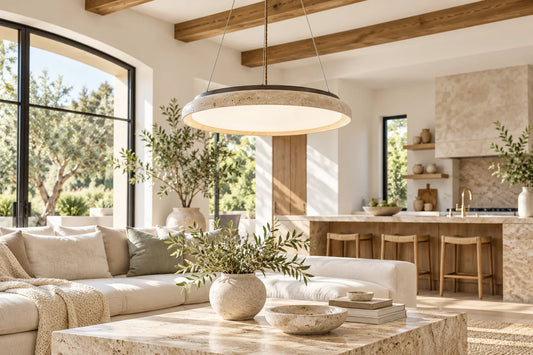
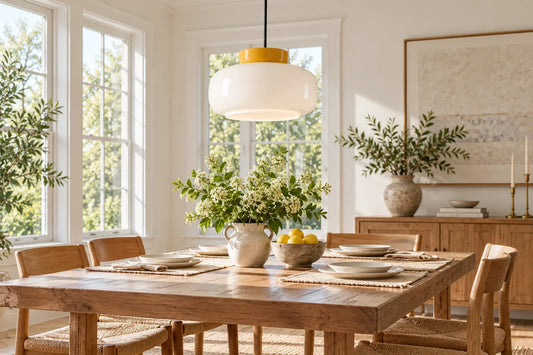
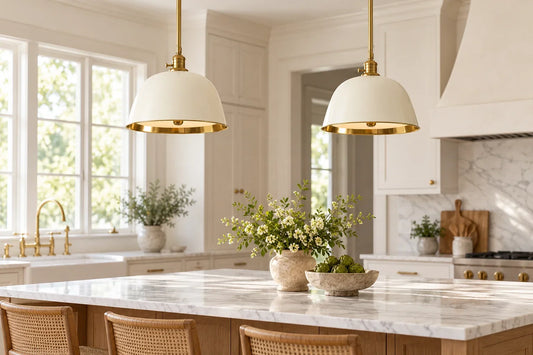
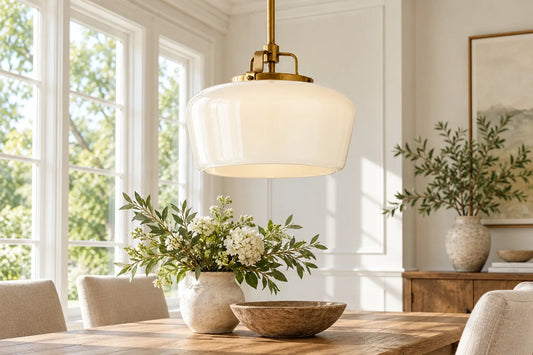
The Ava opal white glass pendant spreads light across a wide shade so the table or island feels settled instead of spotlighted. Use milk glass when conversation sightlines matter more than seeing the bulb itself.

Hammered glass
Crafted sparkle without a hard glare sheet
The Melis hammered glass pendant uses a rippled dome so light scatters across the surface. It is a strong choice when you want handmade character in a kitchen, dining nook, or entry without moving fully into opaque glass.
From workshop character to real rooms
Making only matters if the fixture survives daily life: cooking steam nearby, evening dining, hallway transitions, and the way a shade looks when the room is otherwise quiet.

Kitchen island
Start with 30-36 inches from countertop to the bottom of the shade, then adjust for sightlines. Ribbed or hammered clear glass keeps the work surface lively; milk glass calms it.
Dining table
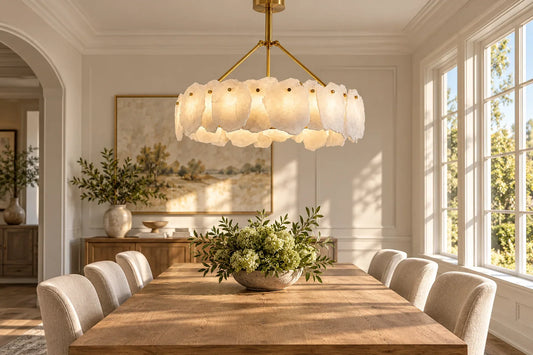
Centre over the table, not the room. A wide opal shade can anchor the table; a pair of smaller textured pendants can keep the surface brighter and more open.
Entry and hall
Compact glass fixtures add arrival glow without crowding circulation. Prefer lower visual weight and confirm headroom on lower ceilings.
Bedroom or bath accent
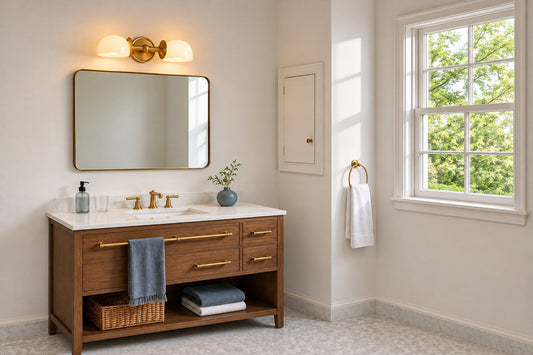
Milk glass and softly textured shades reduce harsh points of light. Confirm damp ratings and local code before placing any fixture in a wet or damp zone.

If you are building a softer layered look around glass, Merge's guide to silk-inspired lighting shows how textured glass can sit beside fabric and woven shades without competing for attention.
Natural variation is part of the making
Expected character, not a defect by default
Handmade glass can show small bubbles, subtle thickness changes, tone shifts, and finishing differences from piece to piece. Merge treats these as natural character when they stay within the approved range for the product. Contact support for new cracks, sharp chips, loose fittings, lifting coatings, or any electrical issue.
Before you hang a pair or a row, compare the delivered shades in the same daylight. Minor variation usually reads as depth once the fixtures are lit. Large mismatches in colour, texture density, or edge finish should be checked against the product photos and support guidance.

Care that protects the glass story
Glass keeps looking intentional when cleaning stays gentle and infrequent enough to avoid abrasion.
- Turn power off at the switch and breaker; let the fixture and bulb cool completely.
- Start with a clean, soft, dry cloth. Do not spray liquid onto the fixture.
- If needed, put a mild approved cleaner on the cloth, never on the glass while it is installed wet near electrical parts.
- Avoid abrasive pads, bleach, ammonia, acids, alcohol, solvents, and steam.
- Remove glass only when the product guide explains how and you can support it safely. Use a qualified installer for large, high, or heavy shades.
For clear ribbed glass, a warm filament LED often makes the texture more legible. For milk glass, a softer lamp still works best when the shade, not the bulb, is the glowing surface.
Choose glass by the light you want to live with
The path from workshop to home is practical: pick the glass behaviour, confirm scale and finish, plan hanging height, and keep cleaning simple. Then let the fixture do quiet optical work every evening.
Explore clear, ribbed, milk, hammered, and other verified options in the Merge Lighting glass lighting collection. Current sitewide offer: 12% off with code MER12 during the Halloween event window shown on the storefront.
Bring workshop glass into the room
Compare glass types, finishes, and silhouettes, then choose the fixture that matches the way you want light to land on your table, island, or wall.
Tags:
Previous
How to Install a Chandelier on a High Ceiling: A Complete Planning Guide
Next
Why Choose Brass Lighting? The Timeless Finish That Brings Warmth to Your Home