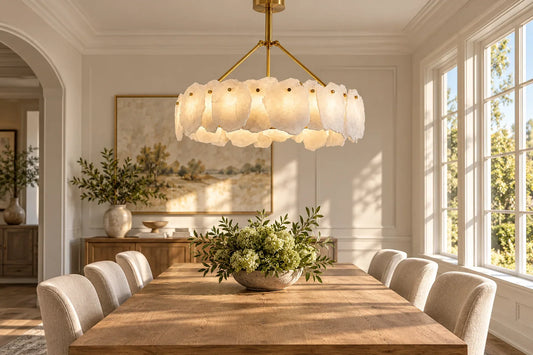
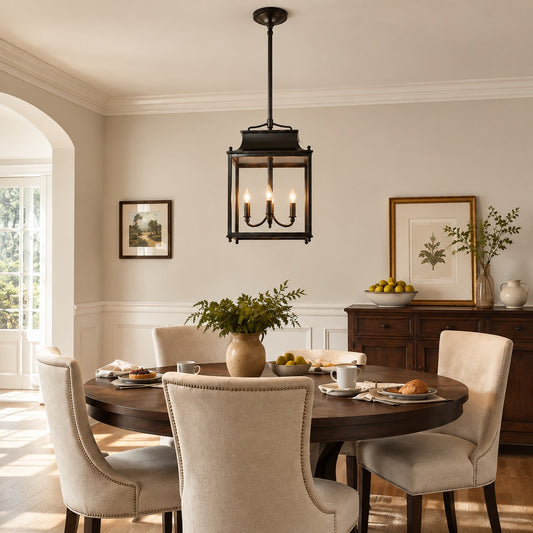
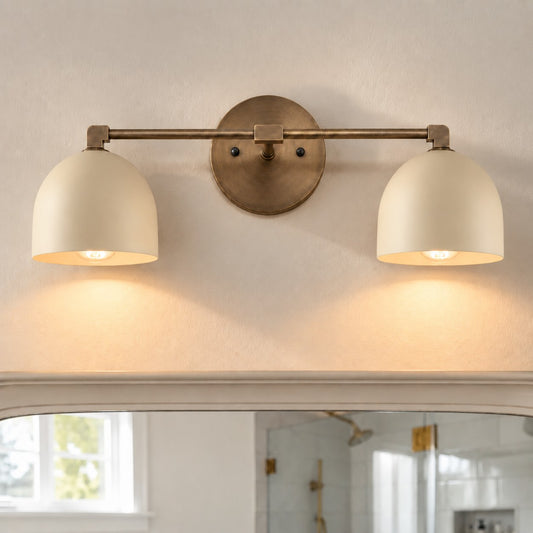

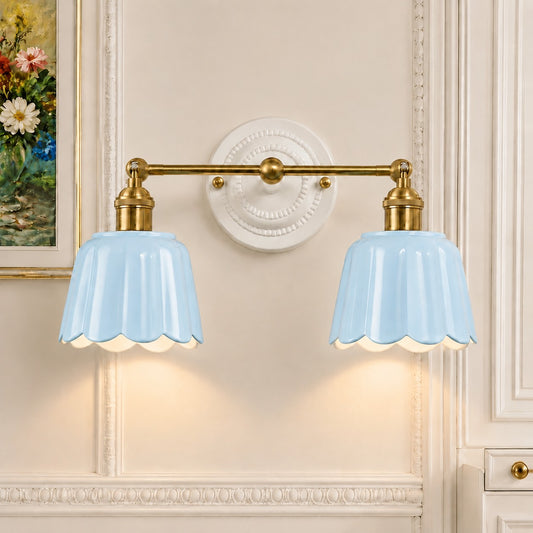
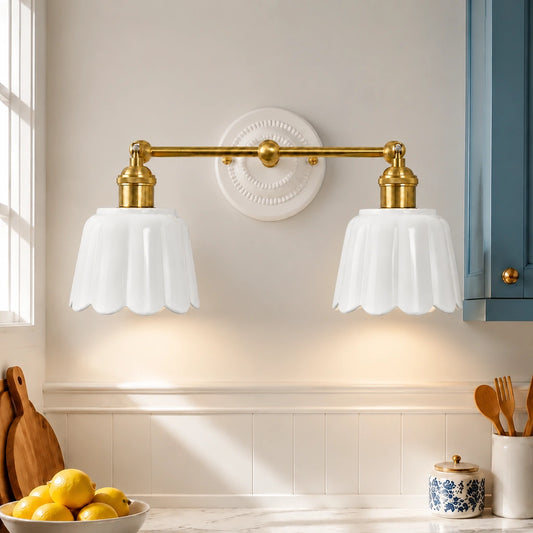

Travertine lighting is having a moment because it brings mineral weight and quiet texture into rooms that are tired of flat metal and plastic shine.
People are obsessed with travertine lights for the same reason they love limestone floors and plaster walls: the surface looks made by nature, not stamped. On Merge Lighting's materials story, travertine is primarily opaque. It does not glow like alabaster from within. Its matte mineral face catches grazing light and returns a soft, low-glare reflection with natural pores and banding.
Why Everyone Is Obsessed with Stone Lighting Right Now
American interiors have been moving toward quieter materials: oak, linen, plaster, and stone. Travertine lighting fits that shift without asking the whole house to go full spa. One pendant or sconce can make a white kitchen feel grounded, or turn a plain hallway into a gallery moment.

Texture you can read
Pores and soft banding give the shade or body a hand-finished presence that smooth glass cannot fake.
Low-glare calm
Opaque stone softens contrast. Rooms feel quieter even before you dim the switch.
Modern-organic range
The same mineral language works in wabi-sabi, quiet modern, coastal, and collected traditional spaces.
Not just a vanity fad
Pendants, flush mounts, and wall sconces now carry the look beyond bathrooms into kitchens, halls, and living rooms.
If you want the deeper material primer, start with Merge's complete guide: What Is Travertine Lighting? This article focuses on why the trend stuck, and how to choose pieces that still feel current next year.
What Travertine Actually Does to Light
Material is part of the light. Travertine brings mineral weight, soft banding, and open pore structure. Because most decorative travertine bodies are opaque, the fixture shapes light by reflection and edge highlight rather than by full translucency. That is why travertine reads differently from milk glass or alabaster: you notice the stone first, then the glow.

Browse the travertine lighting collection with that filter: which silhouette still looks complete with the bulb off, and which room needs soft bounce instead of sparkle.
Where the Trend Shows Up at Home
Kitchen island
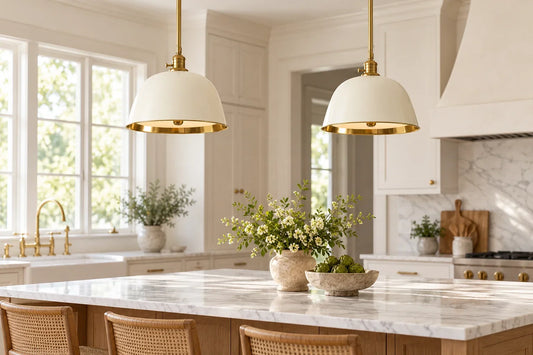
Stone pendants add organic weight above marble or quartz without competing with cabinet hardware sparkle.
Bath and vanity
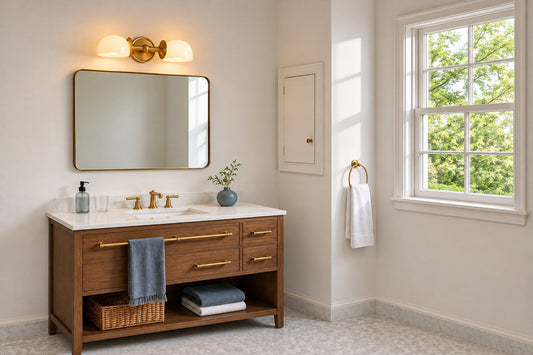
Rotatable travertine sconces frame mirrors with mineral calm. Confirm damp ratings before wet-zone installs.
Hall and entry
Flush mounts and compact ceiling stones finish low ceilings without a heavy chandelier.
Living wall
A single travertine-and-wood sconce can act like a small sculpture beside art or a console.
The Curated Edit: Four Ways to Wear the Trend
These four ACTIVE Merge fixtures show different jobs for the same mineral story. Use them as a shortlist, not a matching set.

Island soft focus
Nora wabi-sabi travertine frosted glass pendant
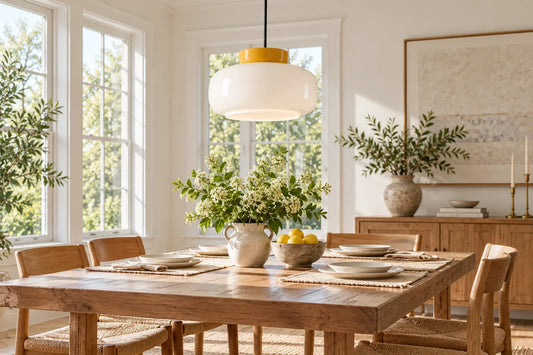
Travertine meets frosted glass for kitchen islands and breakfast nooks that want stone character with a gentler downward glow. Hang one as a centerpiece or a short row when the island is long.

Vanity workhorse
Bronte rotatable travertine vanity sconce
A farmhouse-modern vanity option with rotatable heads, so the stone structure can frame a mirror while the light aims where faces need it. For more vanity-specific layout help, see travertine vanity lights: how to choose and style them.

Low-ceiling stone
Dairine travertine flush mount
When ceiling height is tight, a flush stone body keeps the trend without hanging hardware in your sight line. Strong for halls, closets, and secondary bedrooms.

Wall sculpture
Eiren travertine wood and stone wall sconce
Wood and stone together push the wabi-sabi side of the trend. Use it where you want the fixture to read like an object, not only a light source.
How to Live with the Trend (Without Fighting the Stone)
- Expect natural variation in tone, pores, and banding between pieces. Compare fixtures in the same daylight when they arrive.
- Pair travertine with quiet neighbors: oak, linen, plaster, brushed brass, or black metal used sparingly.
- Do not demand glass-level translucency from opaque stone. Choose alabaster or glass when you need glow-through.
- Clean gently. Dust first. Avoid harsh acids and abrasive pads that can etch or stain mineral surfaces.
- Confirm dimensions, mounting type, and any damp rating on the product page before install.
Simple obsession test
If you still like the fixture in cool morning light with the bulb off, you are choosing material, not only a social-media glow. That is the version of the trend that lasts.
Bring mineral calm into the room
Travertine lighting stuck around because it solves a real design need: texture, quiet reflection, and a finished silhouette in daylight. Pick the room job first, then the silhouette, then accept the stone's natural variation as part of the point.
Explore pendants, sconces, and ceiling stones in the Merge Lighting travertine lighting collection. Current sitewide offer: 12% off with code MER12 during the Halloween event window shown on the storefront.
Shop the travertine lighting trend
Compare stone pendants, vanity sconces, and flush mounts, then choose the fixture that still looks honest when the house is bright and quiet.
Tags:
Previous
The Ceramic Lighting Guide: How to Bring Warmth, Texture, and Artful Character Into Your Home
Next
Understated Luxury: The "Quiet Opulence" Aesthetic Hidden in Alabaster Lighting