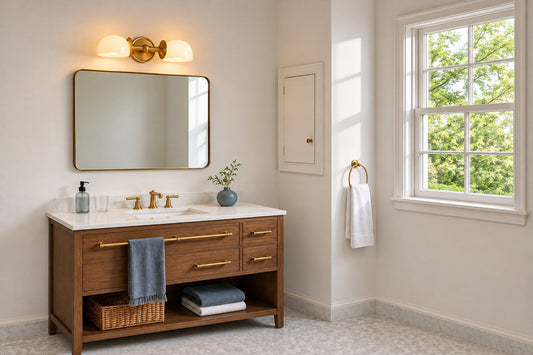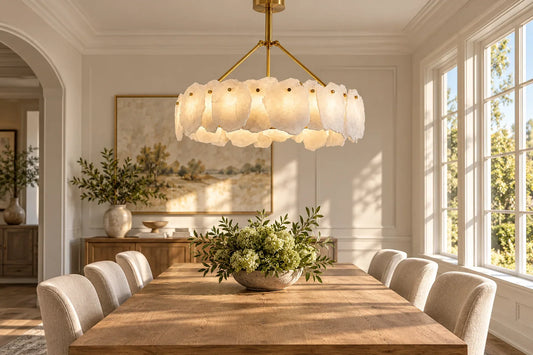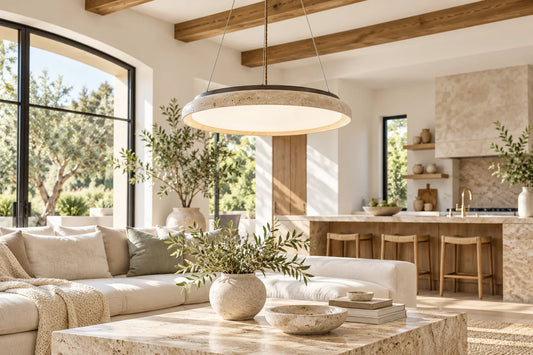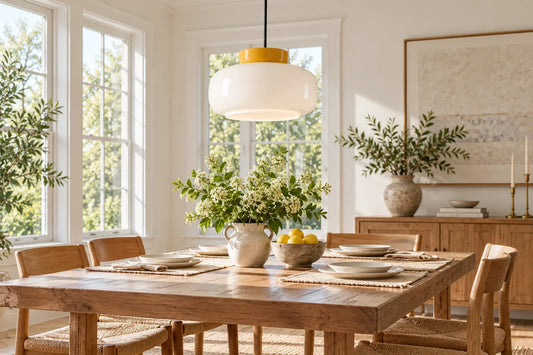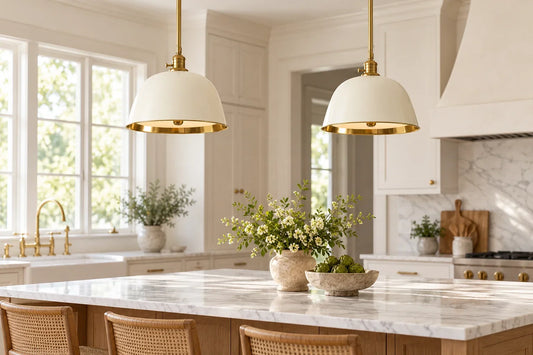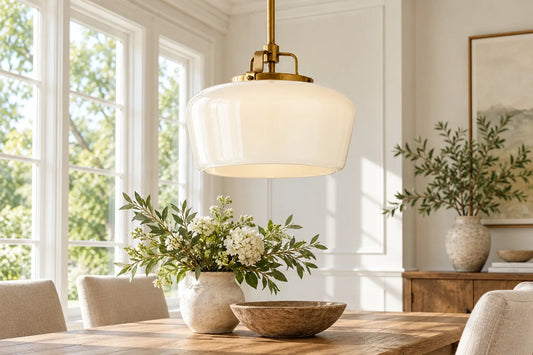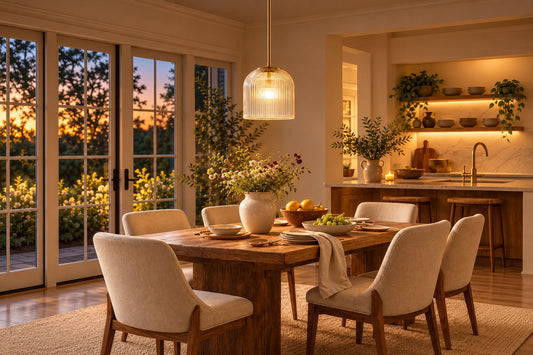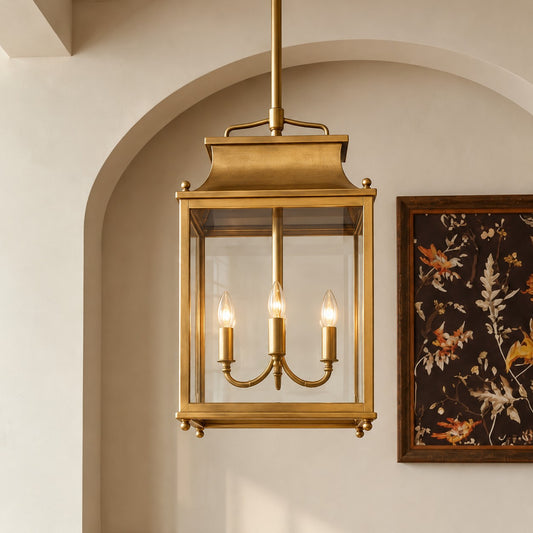
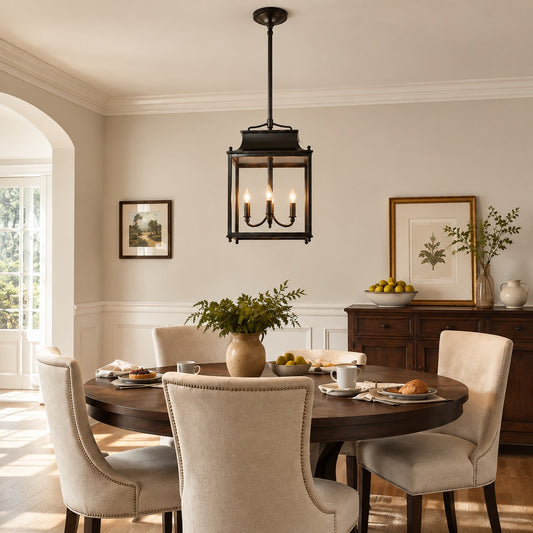
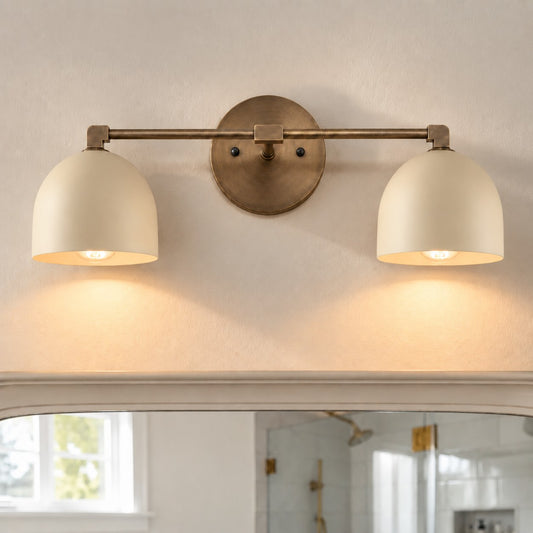

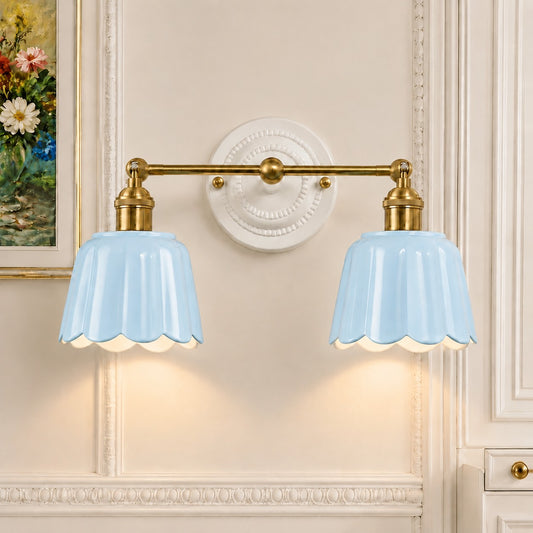
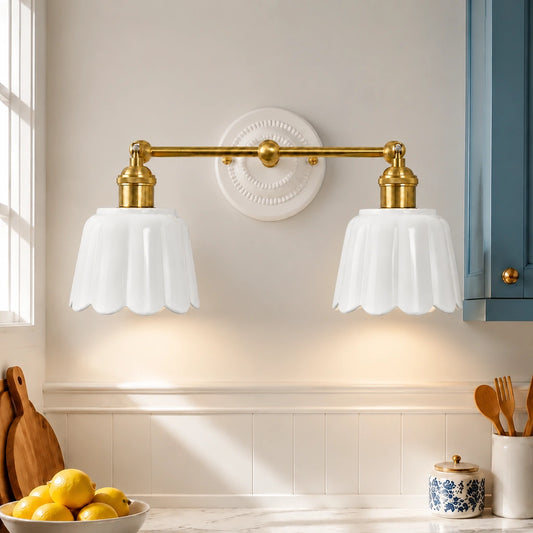
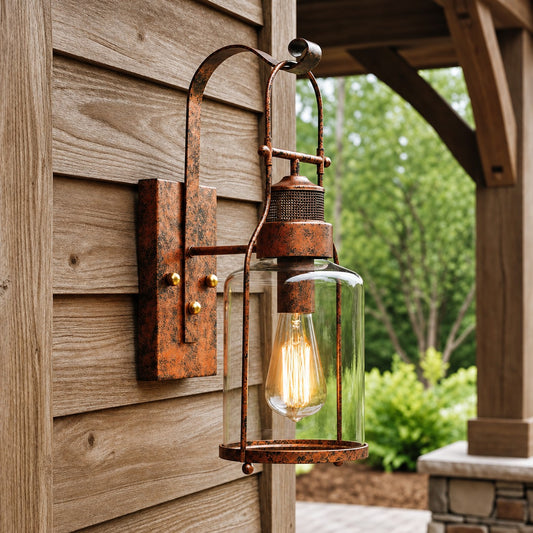
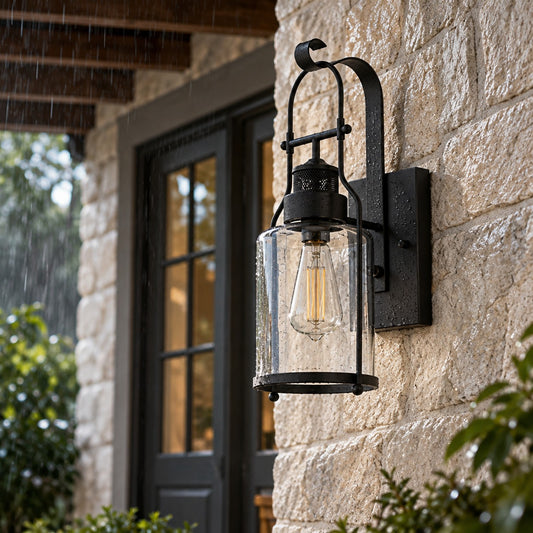
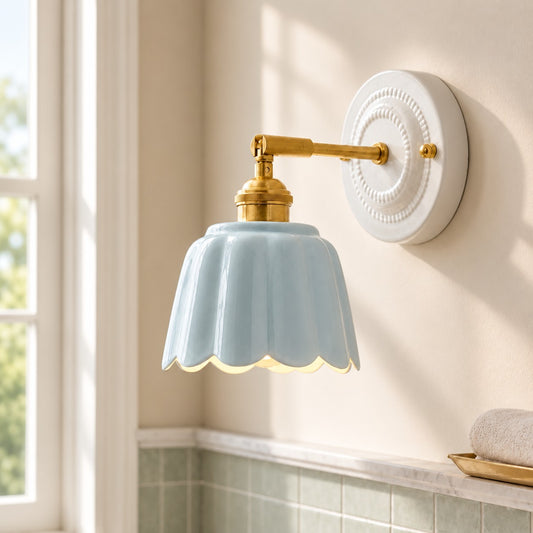
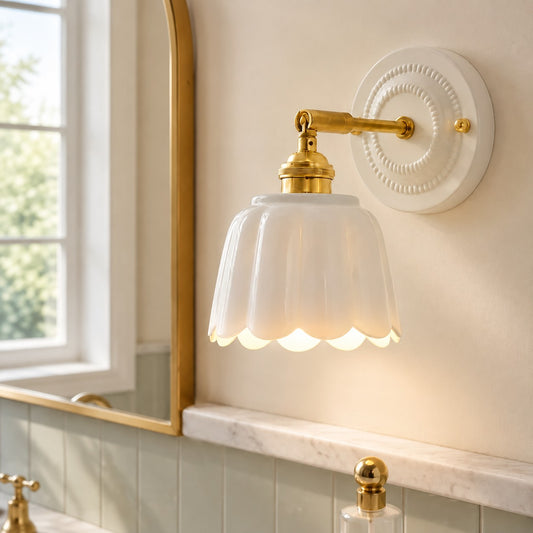

Silk lighting is less about buying a literal silk shade and more about creating silk's visual effect: filtered brightness, gentle movement, tactile depth, and a warm glow that makes a room feel composed. Use fabric, linen, pleats, woven texture, and softly reflective glass as the material vocabulary, then keep the silhouette clean so the result feels modern rather than ornate.
1. From Ceramic Warmth to Silk Softness: A Natural Evolution
Ceramic lighting gives a room visual weight. Its surface is solid, matte, and grounded, which is why it works so well with timber, stone, and painted cabinetry. Silk-inspired lighting moves in the opposite direction. It softens the outline, filters the bulb, and lets the fixture feel almost architectural when switched off and atmospheric when switched on.
The transition does not require replacing every hard material. Pair one soft shade with a ceramic lamp, a wood console, or a stone side table. The contrast makes the texture legible. A room full of only soft surfaces can feel vague; one or two crisp edges give the glow somewhere to land.

2. Why Silk Lighting Feels So Different in Modern Interiors
Modern interiors often contain large uninterrupted planes: flat cabinet doors, plaster walls, wide flooring, and streamlined furniture. A silk-like shade adds a small change in surface behaviour. Instead of returning a hard highlight, fabric or woven material spreads the light across a broader area. The eye reads that as comfort.
Filtered brightness
A shade reduces the sharpness of the bulb and creates a calmer pool of light around seating, beds, and dining tables.
Quiet movement
Pleats, weave, and ribbing create fine shadows that change as you move through the room.
Visual softness
A pale or textured shade can make a large fixture feel lighter than the same shape in dark metal.
Use this effect where the room needs relief from hard geometry. In a minimal bedroom, a fabric wall light can make the bed feel more inviting. In a dining room, a translucent shade can keep the centre of the table intimate without blocking sightlines.
3. The Inspiration Behind Silk Lighting: Nature, Craft, and Cocooning Forms
Silk-inspired interiors borrow from three sources. Nature contributes irregularity: the variation of a weave, the curve of a shell, or the warm colour of natural fibre. Craft contributes evidence of the hand: pleats, hammered glass, woven strands, and subtle changes in thickness. Cocooning forms contribute enclosure: shades that wrap the light rather than exposing the bulb from every angle.

Let one detail carry the story
The Drenor pleated wall light uses fabric and an antique metal finish as its character points. Keep the surrounding hardware and wall colour relatively calm so the pleat reads as texture, not clutter.
When choosing a fixture, ask what the material is doing. Linen can soften glare. Rattan can add a visible pattern. Ribbed glass can create texture while preserving openness. Pleated fabric can make a small accent feel decorative. The answer should influence placement and bulb choice, not just the shopping category.
4. How Silk Lighting Changes the Mood of a Space
Light mood depends on direction, diffusion, colour, and scale. A silk-like shade is most effective when it supports a room's use instead of trying to transform every surface at once.
| Space | Silk-inspired move | Result to look for |
|---|---|---|
| Bedroom | Use pleated or linen wall lights beside the bed. | Soft reading light with a quieter focal wall. |
| Living room | Pair a woven ceiling shade with lower lamps. | Warm layers that do not flatten the seating area. |
| Dining room | Use textured glass or fabric above the table. | A defined centre with preserved conversation sightlines. |
| Hallway | Choose a compact shade with one tactile material. | A welcoming transition without visual crowding. |
60-second mood test: Turn off the overhead lights, switch on the softest fixture, and sit in the room's main position. If the glow lands at eye level or leaves the work surface too dim, move the fixture or add a separate task layer rather than choosing a brighter bulb by default.

5. Material Language: What Makes Silk-Inspired Lighting Special
Use a small material system instead of collecting every soft texture. A practical combination is one diffusing material, one structural material, and one supporting finish.
Diffusing surface
Linen or pleated fabric spreads the bulb's brightness and creates a softer edge. Check that the shade is appropriate for the heat and lamp type specified by the product.
Textured surface
Rattan, ribbed glass, or hammered glass adds a pattern that changes with viewing angle. Use one strong texture as the room's tactile lead.
Quiet structure
Black, brass, or antique metal can frame a soft shade. Repeat the finish once or twice in hardware, furniture, or a mirror frame.
When glass belongs in a silk story
Silk lighting does not have to be opaque. The Crosby ribbed glass pendant shows how a translucent material can still feel soft when its vertical texture breaks up direct reflection. Choose it when you want atmosphere without losing visual openness.


Before you choose a soft-shade fixture:
- Decide whether you need ambient, reading, or accent light.
- Check the shade width, wall projection, canopy, and installed drop.
- Look at the fixture switched off as well as illuminated.
- Confirm bulb type, heat guidance, and dimmer compatibility from the product listing.
- Keep one dominant texture and let the rest of the room support it.
6. Final Thoughts: Designing with Light, Not Just Fixtures
The best silk-inspired lighting is not a decorative label. It is a way to edit the room's sensory balance. Use softness where hard surfaces feel abrupt, texture where the space feels flat, and a quieter glow where the room needs to slow down.
Merge Lighting's linen, pleated fabric, rattan, and textured-glass pieces can help you build that language without committing to a period look. Start with the room's task, choose one material to carry the mood, and then select the silhouette and finish that make the light believable when it is switched off.
Find Your Soft-Luxury Lighting Balance
Compare shades, pendants, wall lights, and natural textures across the Merge Lighting collection, then choose the piece that gives your room the right amount of glow and visual quiet.
Explore Soft-Luxury Lighting
Tags:
Previous
How High to Hang a Chandelier Over a Dining Table: Height & Size Guide
Next
How to Install a Chandelier on a High Ceiling: A Complete Planning Guide