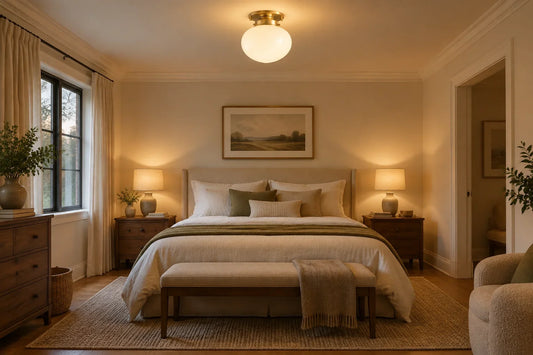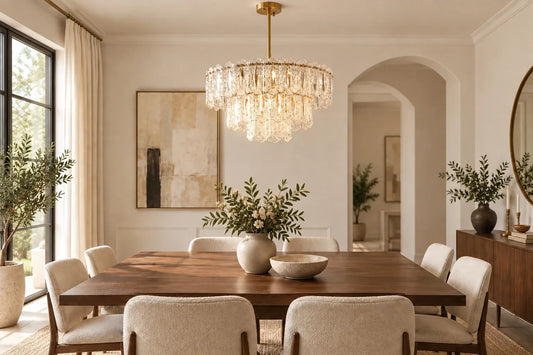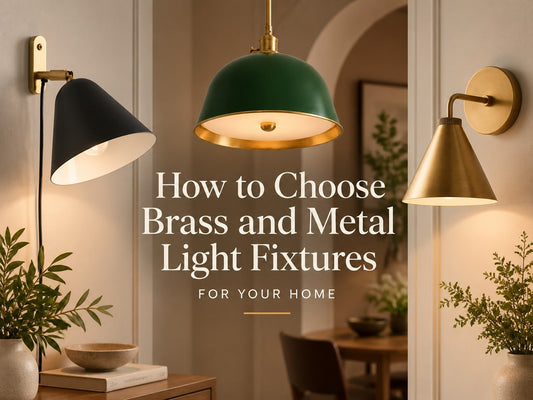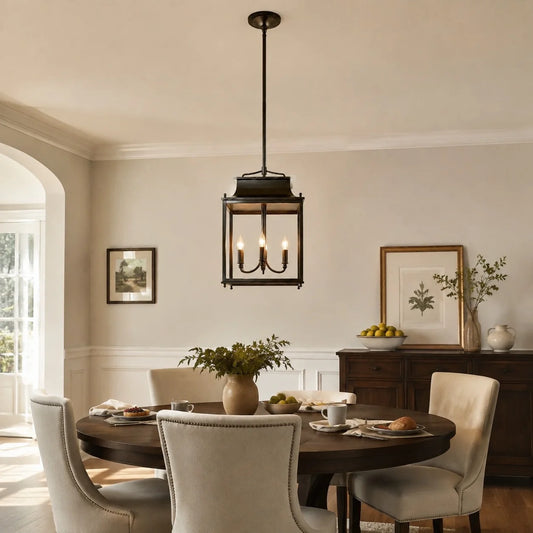
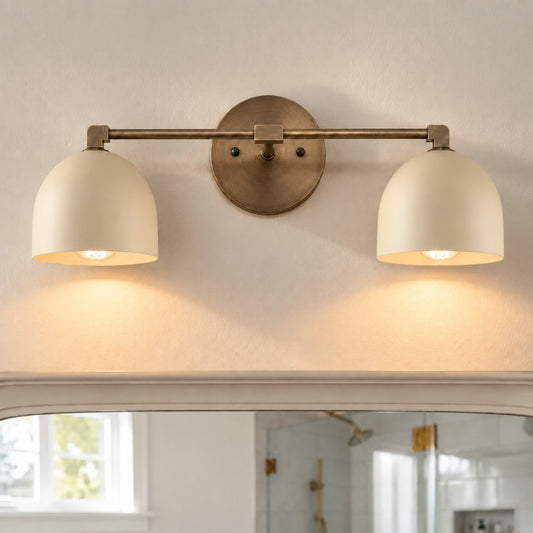

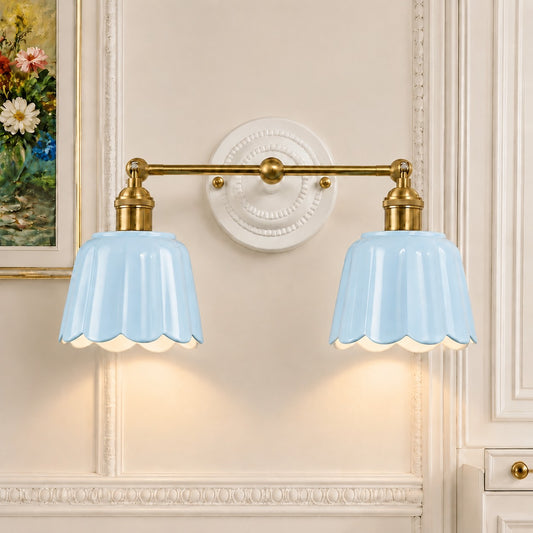
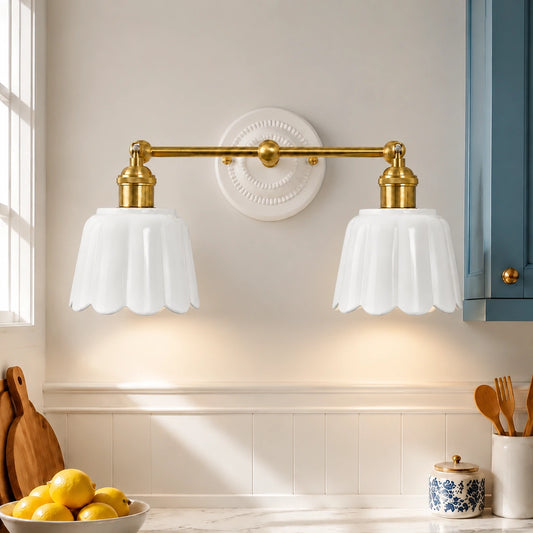
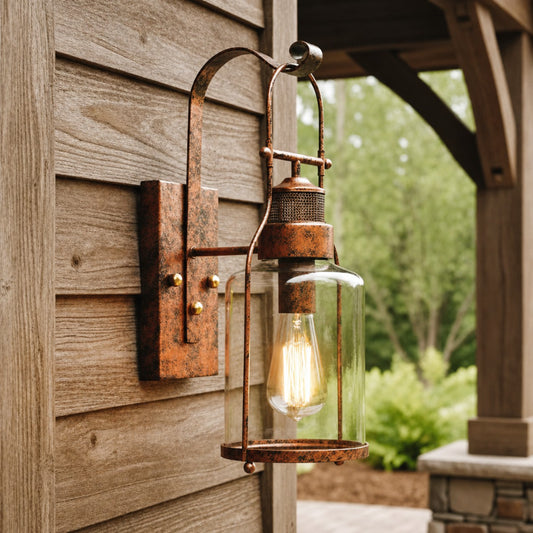
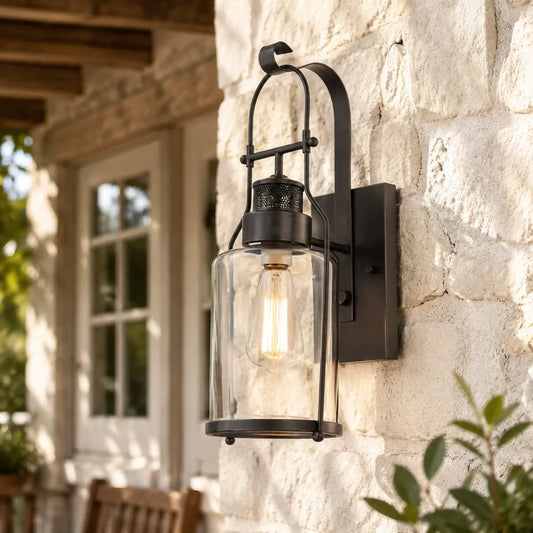
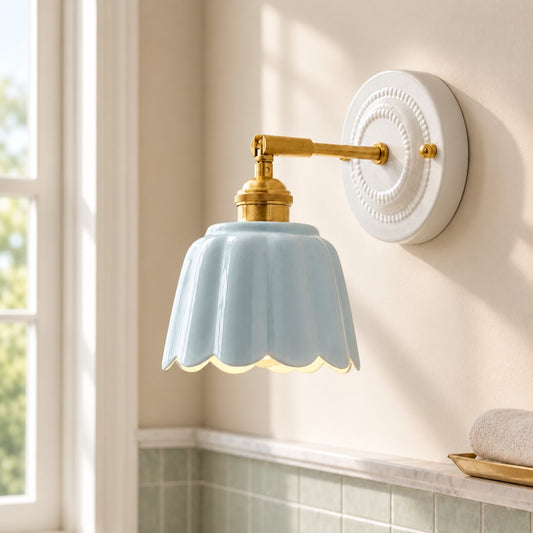
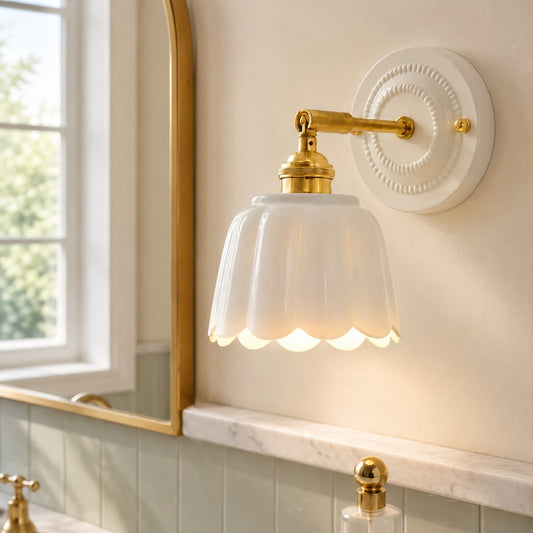

Modern farmhouse lighting works when rustic warmth is edited through clean proportions. Start with one simple architectural fixture, add natural texture through linen, wood, rattan, or ribbed glass, and repeat one metal finish across the room. The result should feel collected rather than themed: practical light for everyday tasks, softer pools of light for atmosphere, and just enough handcrafted character to keep modern surfaces from feeling cold.
What Modern Farmhouse Lighting Really Means
Traditional farmhouse interiors often lean on visibly rustic materials, familiar lantern shapes, and dark ironwork. The modern version keeps the warmth but simplifies the outline. Think a drum shade instead of an ornate chandelier, a clear or ribbed glass pendant instead of a heavily distressed lantern, or a slim aged-brass arm paired with an unfussy fabric shade.
A useful rule is to choose one element for character and keep the others quiet. If the shade has a strong weave or pleat, use a restrained frame. If the silhouette is sculptural, choose a calm finish. This prevents reclaimed wood, black metal, patterned fabric, and decorative bulbs from competing in the same sightline.
Keep
Warm materials, honest texture, practical forms, and a sense of comfort.
Edit
Heavy distressing, novelty motifs, excessive black metal, and too many vintage references.
Add
Clear geometry, balanced negative space, and lighting that works when switched off.

Build the Room With Three Layers of Light
A single ceiling fixture rarely creates the relaxed depth associated with modern farmhouse rooms. Plan three layers, even if each layer is visually simple.
| Layer | What it does | Farmhouse-friendly fixture |
|---|---|---|
| Ambient | Provides the room's general illumination. | Drum ceiling light, flush mount, chandelier, or broad pendant. |
| Task | Supports cooking, reading, grooming, or working. | Island pendants, wall sconces, or directed ceiling lights. |
| Accent | Adds warmth and gives the room depth after dark. | Bedside sconces, table lamps, or a small light near artwork. |
Make one layer the visual lead. In a kitchen, that may be pendants over the island. In a bedroom, a quiet ceiling light can recede while fabric wall lights create the atmosphere. When every fixture demands attention, the room loses the calm that makes the style feel modern.
Choose Materials Before You Choose a "Farmhouse" Label
Material is a more reliable guide than style names. Linen and woven shades soften glare and add tactile warmth. Clear glass keeps a room visually open. Ribbed or hammered glass adds craft without blocking the view. Wood and rattan bring natural variation, while aged brass and black metal define the structure.

Glass for clarity
The Crosby ribbed glass pendant is available in brass or black and in several shade sizes. That range lets you repeat one form above an island or choose a larger single pendant for a breakfast nook without changing the material story.
Wood for controlled rustic character
The Melis pendant combines clear hammered glass with a wood finish and three related shade shapes. Use one shape for a cleaner result, or mix the related shapes only when the surrounding cabinetry and hardware are quiet.

How to coordinate finishes
Choose one dominant metal and repeat it in two or three visible places. Aged brass can connect lighting to cabinet pulls or a mirror frame; black can relate to window frames, chair legs, or a faucet. The finishes do not need to match exactly, but they should share a similar level of shine. Mixing a highly polished metal with deeply weathered finishes creates a stronger contrast and should be deliberate.
The 70/30 rule: Let roughly seventy percent of the visible lighting feel clean and architectural, and use the remaining thirty percent for farmhouse texture or vintage character. This is a design guideline, not a measurement, but it is an effective way to avoid a themed room.
A Room-by-Room Modern Farmhouse Lighting Guide
Kitchen
Use pendants to define the island, then keep nearby recessed or ceiling lighting visually quiet. Clear and ribbed glass preserve sightlines, especially in an open-plan room. Black frames add contrast to white cabinetry; aged brass warms stone and painted wood. Always confirm the actual fixture size, installed drop, and electrical requirements before ordering.
Dining room
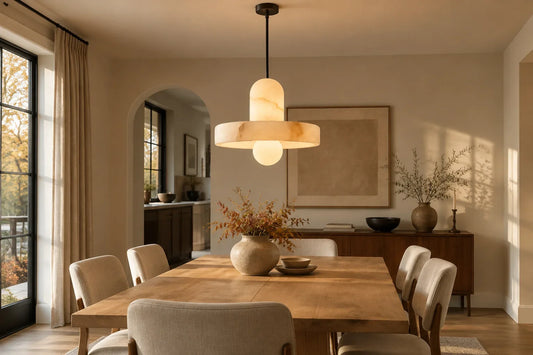
Choose a fixture with enough visual presence to relate to the table, but avoid an overly literal wagon-wheel or barn motif unless the rest of the room is extremely restrained. Linen, hammered glass, or a simple metal frame can communicate the style more subtly. Put decorative texture near eye level and use dimmable-compatible lamps and controls only where the product and installation support them.
Living room
Balance a central ceiling light with lower pools of light. A woven shade can soften a room with straight sofas and built-ins. The Chloe rattan ceiling light combines a metal base with a woven shade and comes in black or brass across four diameters, allowing the natural texture to scale from a hallway to a larger living area.

Bedroom and hallway
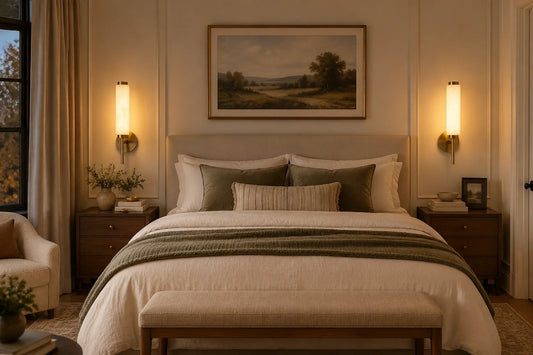
Use the smallest dose of nostalgia here. A pleated or patterned shade works well when bedding, wall colour, and furniture remain calm. The Drenor wall light pairs fabric with antique-brass or antique-bronze options, making it a stronger decorative accent than a plain metal sconce. One pair beside a bed or a single fixture in a reading corner is usually enough.

Bathroom and utility spaces
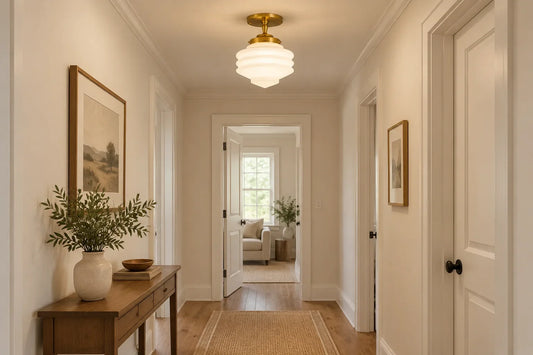
Farmhouse character should never take priority over suitability. Verify the exact fixture's location rating and local electrical requirements for the intended bathroom position. In utility rooms and entries, compact flush mounts and wall lights often provide the right balance of practicality and texture without reducing clearance.
Get Scale and Placement Right
Fixture dimensions and visual scale are different. A wide linen shade may look lighter than a smaller dark-metal fixture because its colour blends into the ceiling. Before buying, mark the fixture's width on the floor with painter's tape and hang string from the proposed mounting point to show its installed drop. View the outline from the doorway, the main seat, and the adjacent room.
For grouped pendants, mock up the entire arrangement rather than one shade. Check the distance between fixtures, the overall span, and whether the group blocks conversation or sightlines. Treat common hanging-height formulas as starting points; ceiling height, fixture proportions, table size, and household needs can change the final position.
Common Modern Farmhouse Lighting Mistakes
Too much black
Black is useful for structure, but repeating it on every light, tap, handle, frame, and chair can make the room feel outlined rather than relaxed.
One light for every job
A dramatic pendant cannot replace task lighting on worktops or softer light near seating.
Texture everywhere
Rattan, distressed wood, seeded glass, and pleated fabric all at once create visual noise. Choose one or two textures per room.
Another common error is selecting fixtures only from close-up product images. Always check room-context images, canopy dimensions, suspension length, wall projection, and the appearance of the fixture when switched off.
Modern Farmhouse Lighting Shopping Checklist
- Define the fixture's job: ambient, task, or accent lighting.
- Choose one dominant metal finish and one supporting material.
- Decide whether the fixture is the focal point or a quiet layer.
- Check the exact dimensions, canopy, projection, and installed drop.
- Mock up width and height in the room before ordering.
- Verify bulb base, bulb count, wiring, and dimmer compatibility from the product listing.
- For bathrooms or damp areas, confirm the exact location rating and local requirements.
- Review the selected variant, because finish and size options can change the look substantially.
FAQs
Can modern farmhouse lighting work in a small home?
Yes. Choose a compact fixture with one tactile material, such as ribbed glass or linen, and keep the frame simple. Avoid stacking several rustic details into a small sightline.
Should all farmhouse light fixtures match?
No. Repeat a finish or material to create continuity, but vary the fixture type by room and task. A brass pendant can relate to a brass wall light without sharing the same shade or silhouette.
Is black or brass better for modern farmhouse style?
Black creates stronger graphic contrast; brass adds warmth. Choose according to the room's fixed finishes, then repeat the selected metal in a restrained way.
What shade materials suit modern farmhouse interiors?
Linen, rattan, clear glass, ribbed glass, and hammered glass all work well. The best choice depends on whether you need softness, openness, or visible texture.
How do I keep farmhouse lighting from looking dated?
Use clean proportions, limit distressed finishes, and let only one element carry obvious vintage character. A fixture should still look convincing when the light is off.
Find Your Modern Farmhouse Balance
Start with the room's lighting job, then compare silhouette, material, scale, and finish. A thoughtful fixture should make the space warmer without turning it into a theme.
Explore Merge Lighting Fixtures
Tags: