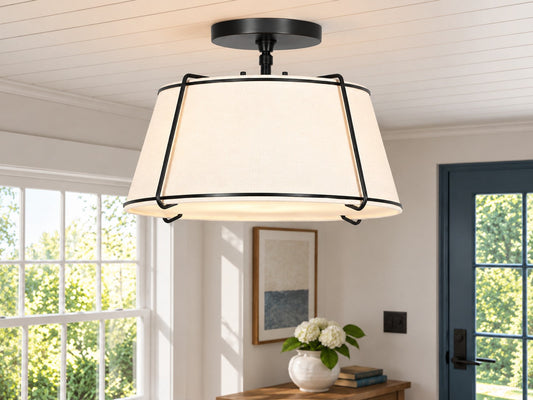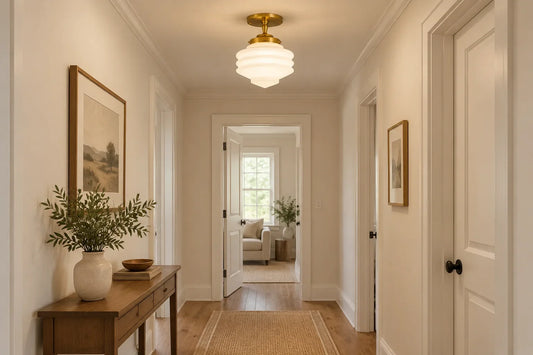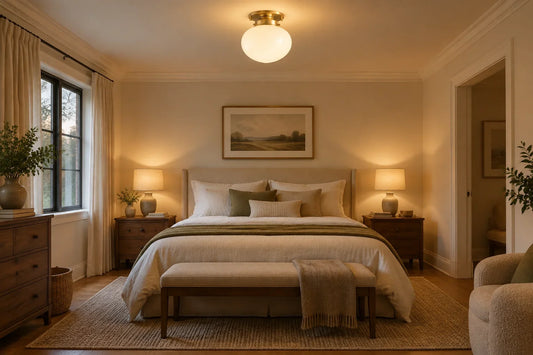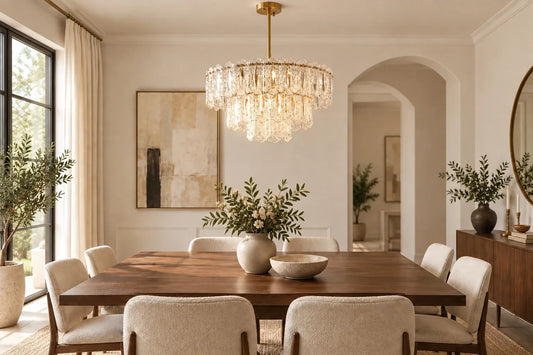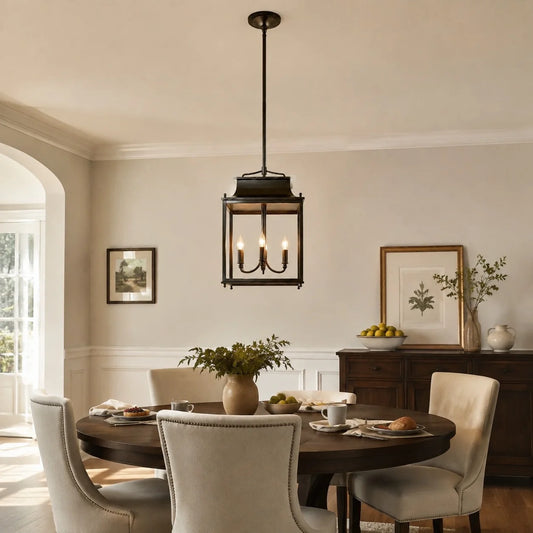
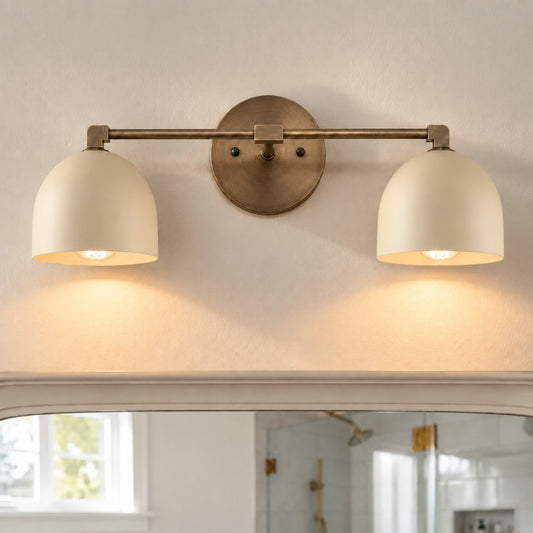

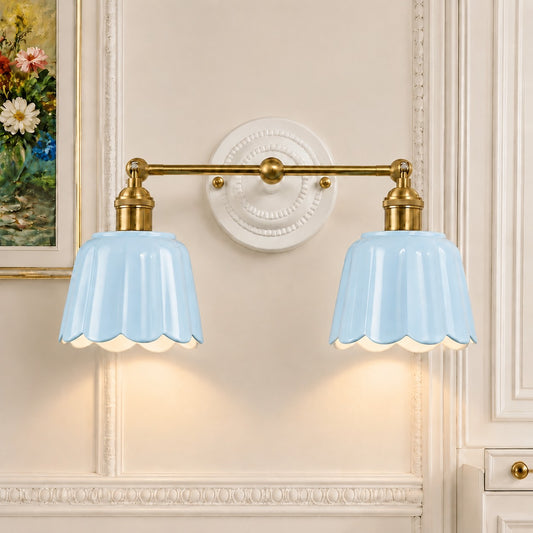
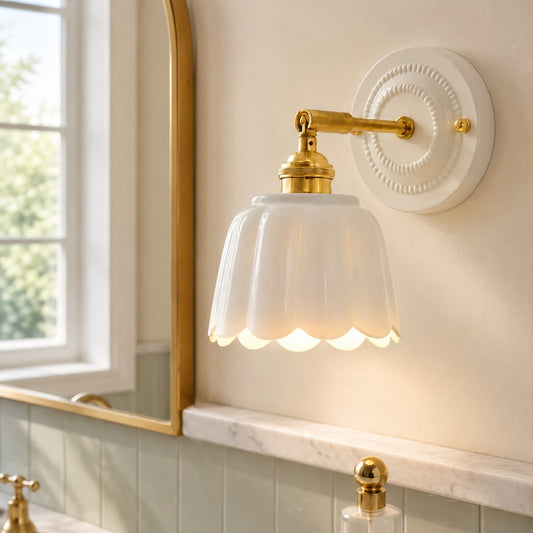

Real alabaster is a natural stone with visible variation and a softly translucent glow. Faux stone can be attractive and practical, but the two materials behave differently. This guide shows what to inspect before you buy and how to match the stone to your room.
What Is Genuine Alabaster?
Alabaster is a soft, fine-grained stone valued for its milky translucency. Light travels through thin areas, so a shade can glow rather than simply reflect light. Veins, clouds, and small color shifts are normal. Those variations are part of the material, not defects to be hidden. Merge's alabaster lighting collection includes pendants, sconces, and table lamps that show how the same stone can work at several scales.

Real vs. Faux Alabaster: What to Check
Start with the product materials field. Genuine alabaster should be identified as stone or alabaster, not only as resin, polymer, or marble-look material. Look for natural veining that changes from piece to piece rather than a repeated printed pattern. A translucent edge and uneven glow are useful visual clues, but a photograph alone cannot certify composition.
Practical rule:
Use the material specification as the deciding evidence, then use images to judge color and veining. Do not choose from a generic 'stone look' label when the material matters to you.
Eight Alabaster Design Directions Worth Comparing
1. Round disc
Eivis uses a broad circular profile for a quiet focal point over a table or island.
2. Organic wave
Calix adds sculptural movement while keeping the stone glow soft.
3. Globe
A globe silhouette gives even visual weight and works well in a breakfast nook or entry.
4. Cylinder sconce
Zamira is a compact vertical option for a hallway or bedside wall.
5. Rectangle sconce
Longer stone panels spread light across a vanity or artwork wall.
6. Layered pendant
Multiple thin slabs create a more architectural chandelier effect.
7. Table lamp
Roma brings the stone story to a nightstand or console.
8. Double wall light
Twin tubes add symmetry beside a mirror, bed, or fireplace.
Size, Care, and Buying Checks
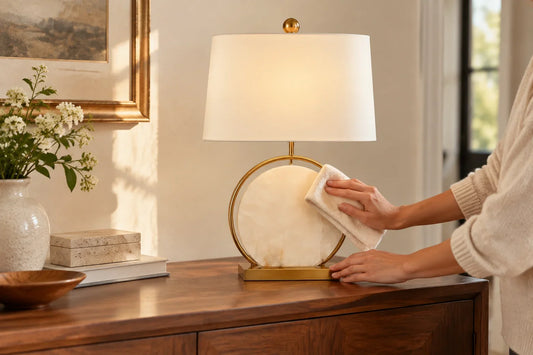
Measure the furniture below first. A large stone shade needs visual breathing room, while a small room often benefits from a slimmer pendant or sconce. Confirm the exact diameter, total drop, bulb base, and whether the product is hardwired. For care, dust with a soft dry cloth, avoid soaking or acidic cleaners, and follow the fixture instructions because alabaster is porous and comparatively soft.

When you are ready to compare silhouettes, return to the Alabaster Light collection with your ceiling height, furniture dimensions, and preferred bulb plan. Choose real stone for its unique glow and variation; choose faux only when the specification clearly matches your durability and budget priorities.


Keep Exploring Lighting
Compare verified fixtures, room collections, and practical lighting ideas from Merge Lighting. Use code MER12 for 12% off your order.
Tags:
Previous
Beyond the Kitchen: Creating a Warm American Classic Bedroom with Wall Lighting
Next
Bedroom Ceiling Lights That Actually Transform Your Space