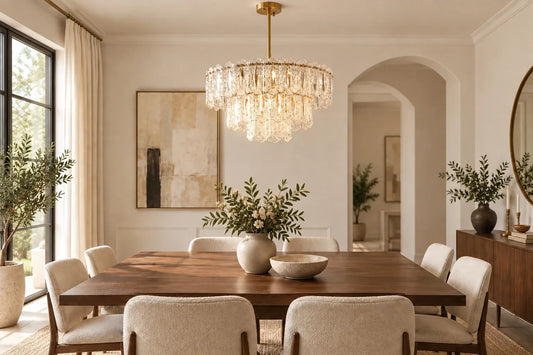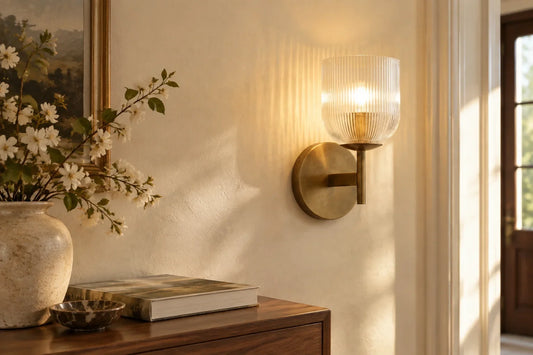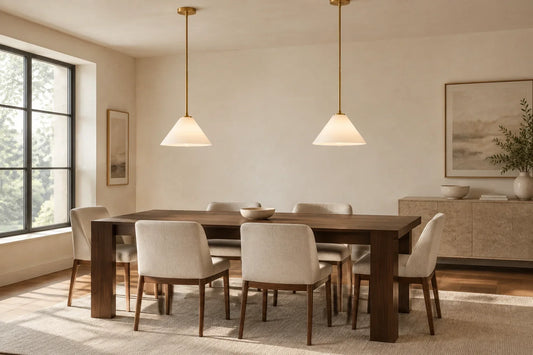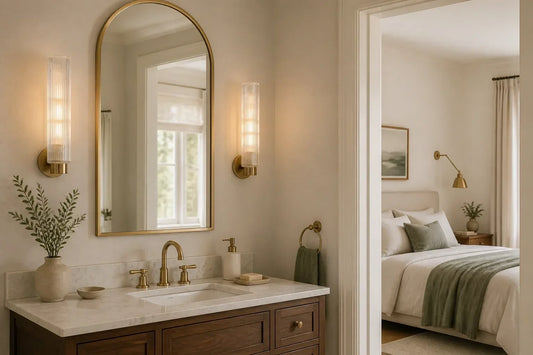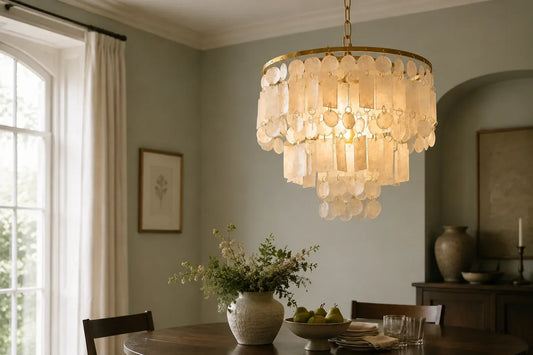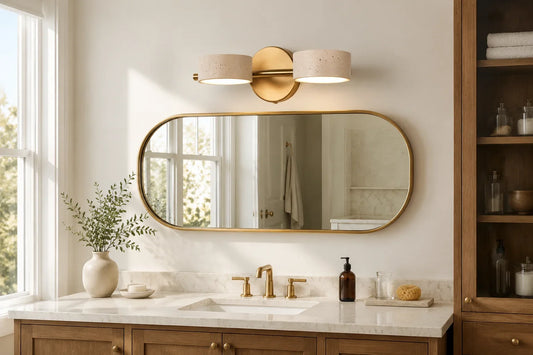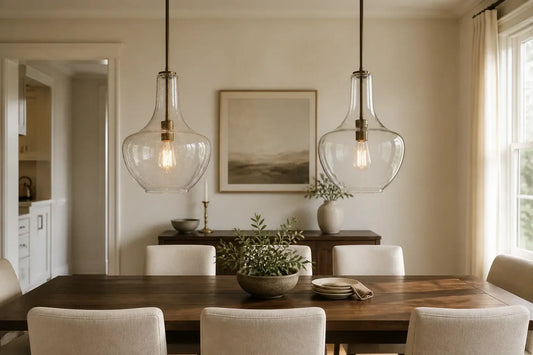
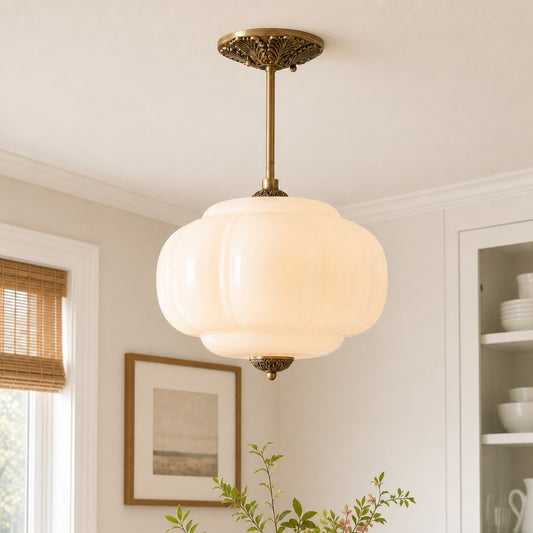
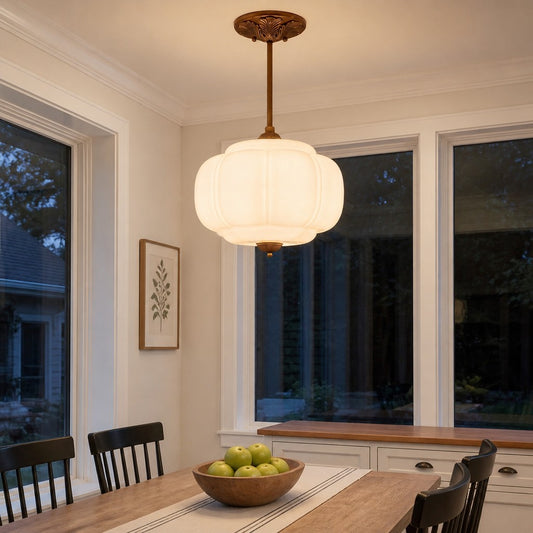

Hammered glass pendant lights are defined by texture, but style comes from the complete combination of glass color, shade shape, hardware, scale, and placement. Use this guide to move from the look you want to the right pendant size and layout for your room.
The appeal of a hammered glass pendant light is its balance of transparency and character. The irregular surface catches daylight, scatters small highlights around a glowing bulb, and gives a clear shade more presence than smooth glass. Yet a cube with dark hardware looks very different from an amber dome or a clear farmhouse pendant with wood details.
The short buying answer
Choose the glass color first for mood, the shade shape for light direction and visual scale, and the number of pendants for the surface below. Only then compare finish, bulb appearance, dimensions, and suspension range.
What Hammered Glass Changes
Hammered glass has an intentionally uneven, dimpled, or water-like surface. It does not diffuse light as completely as milk glass, so the bulb and socket may remain visible. Instead, the texture bends reflections and interrupts a direct view through the shade. The result is usually brighter and more sparkling than an opaque fixture, but visually softer than smooth clear glass.

Texture also adds visual weight. A transparent shade can occupy physical space without creating a solid block in the room, which is useful above an island or table where you want a focal point but still need open sightlines. For a broader comparison of glass fixtures, read Merge Lighting's guide to decorating with glass pendant lights.
Hammered Glass Pendant Styles at a Glance
Hammered glass is not limited to farmhouse interiors. The same surface can support several styles depending on the geometry and fittings around it.
Clean geometry, restrained hardware
Choose a cube, compact dome, or simple cylinder with black, nickel, or understated brass details. Compare the compact Noelle Cube Pendant with the more architectural Kynan Square Water Ripple Pendant; in both, the textured glass supplies interest so the frame can stay quiet.
Clear or recycled glass with natural contrast
Wood collars, aged brass, and rounded shades soften a kitchen or dining room. The mixed silhouettes of the Melis Pendant Light feel collected, while the rounded Marlowe Pendant Light gives the same material a more unified focal-point shape.
Amber color and visible warm bulbs
Tinted glass and compact domes create a warmer, nostalgic effect. The Vintage Textured Glass Dome Pendant makes the amber tone part of the room even when switched off; keep surrounding finishes simple so the glass color remains intentional.
Tall shades and exposed construction
Flared or elongated glass paired with dark metal, nickel, or bronze emphasizes height and the bulb itself. Compare the tall Camille Flared Pendant with the more rustic metal-and-glass profile of the Graft Industrial Glass Pendant.
Small scale and natural restraint
Use one compact geometric pendant or a measured group. The brass-framed Olyth Cube Glass Pendant adds a precise warm accent, while the clear Noelle Cube Pendant keeps the composition lighter and quieter.
Clear or Amber Hammered Glass?

Clear glass
Best when you want brightness, open sightlines, and a shade that feels light in the room. It suits kitchens, compact spaces, pale interiors, and mixed-shape groups such as the Melis Pendant Light.

Amber glass
Best when the pendant should contribute color and atmosphere even when switched off. The Vintage Textured Glass Dome Pendant works naturally with walnut, warm metal, vintage furniture, and intimate dining areas.
Clear glass does not automatically mean cool light, and amber glass does not replace bulb selection. The bulb's color temperature, brightness, and filament appearance still shape the result. Treat the shade tint and the bulb as two separate decisions.
Choose the Right Shade Shape

Best for compact, modern layouts
Cube and geometric shades
A cube has a defined architectural outline but remains visually open in clear glass. The Noelle Cube Pendant comes in three compact forms, making it useful for a small counter, bedside position, or an evenly spaced group.

Best for one strong pendant or a scaled pair
Dome and rounded shades
Rounded glass feels familiar and directs attention downward without sharp visual edges. The Marlowe Pendant Light is available in 8, 14, and 17-inch diameters, so the same design can move from a compact accent to a more substantial focal point.

Best for vertical emphasis
Flared and elongated shades
A tall shade occupies more of the hanging drop and makes the bulb feel enclosed. The Camille Flared Pendant measures 9.06 inches wide by 16.54 inches high, so it needs more vertical breathing room than a shallow dome.
Which Style Works in Each Room?
Kitchen island
Clear glass keeps the composition open. Use repeated Noelle pendants for an orderly modern row, mix the related shapes of Melis for a relaxed farmhouse look, or choose a pair of wider Marlowe pendants when the island needs more visual weight.
Dining table
A wider dome or amber shade creates a stronger focal point. Compare the clear, rounded Marlowe Pendant with the warmer Vintage Textured Glass Dome Pendant, then check the view from seated eye level because the bulb may remain visible through the glass.
Breakfast nook
One compact cube or small dome is usually enough. A single Noelle Cube Pendant keeps a small nook visually open, while the brass-framed Olyth Pendant adds a warmer, more defined outline.
Entryway
Choose a shape that reads clearly from several directions. The elongated Camille Flared Pendant creates a strong vertical marker, but confirm total drop and head clearance before favoring its taller shade.
Bedside
Small geometric pendants free the nightstand surface. Compare the clear Noelle Cube Pendant with the brass-edged Olyth Pendant, then verify switching access, bulb glare, and the distance from the bed before installation.
Open-plan space
Use glass color or hardware to connect nearby zones. Repeating clear textured glass through Melis and Marlowe is usually calmer than repeating the exact same fixture everywhere; reserve the amber Vintage Dome Pendant for the zone that needs a warmer focal point.
One, Two, or Three Pendants?
One pendant
Choose one larger shade for a round table, compact island, nook, or entry. A single pendant should have enough diameter and character to feel intentional.
Two pendants
A balanced pair suits a medium island and gives each shade more visual space. It works especially well with larger domes.
Three pendants
Three smaller shades establish rhythm over a longer island. Repeat one form for a tailored look or mix related shapes for a collected effect.
Do not choose the count from a generic rule alone. Measure the full surface, subtract comfortable end margins, and compare the remaining length with the combined shade widths and gaps. Merge Lighting's multi-pendant lighting guide covers spacing and hanging arrangements in more detail.
Size, Hanging Height, and Bulb Choice
- Measure the surface below. Use the island or table rather than the room alone. Keep the complete arrangement comfortably inside the surface edges.
- Compare visual scale, not diameter alone. A tall 9-inch shade can feel more substantial than a shallow shade of similar width.
- Check the complete installed drop. Shade height and suspension length are separate measurements. Confirm canopy, cord or rod, and adjustment range.
- Test the bulb at eye level. Hammered glass softens the view but does not hide a bright bulb. Select only a base, wattage, and dimming combination supported by the exact fixture.
Verified examples: Melis shades measure 7.5, 9.8, or 10.6 inches in diameter. Noelle's three forms are approximately 5.1 to 7 inches wide. Marlowe offers 8, 14, and 17-inch diameters. Camille is 9.06 inches wide and 16.54 inches high.
Quick mock-up: mark the shade widths on the counter with paper, then hang string from the ceiling to the proposed lowest point. View it from the doorway and normal seating position before ordering.
Hammered Glass Pendant Buying Checklist
- Clear or amber glass for the intended room mood
- Shape that supports the desired light direction
- Single fixture, matched pair, or three-light rhythm
- Shade width, height, and total installed drop
- Hardware finish that connects with the room
- Bulb visibility and glare at normal eye level
- Verified bulb base, wattage, and dimmer support
- Ceiling support, canopy size, and installation access
Cleaning
Dust with a soft microfiber cloth. If deeper cleaning is needed, switch off the light, let the bulb cool, and follow the product instructions before removing glass. Do not spray cleaner onto an installed electrical fixture.
Installation
Confirm whether the exact model is hardwired and whether the ceiling box can support it. A qualified electrician is the safer default, especially when several pendants must align over one surface.
The right pendant is the one whose glass color, shape, and scale still look convincing when the light is off and remain comfortable when it is on. Compare those decisions across the complete Hammered Glass Light collection, then verify the specifications for the exact size and finish you plan to order.
Find Your Hammered Glass Style
Explore clear farmhouse pendants, compact geometric shades, amber domes, and taller industrial forms from Merge Lighting. The current store offer is 12% off with code MER12.
Tags:
Previous
Travertine Vanity Lights: How to Choose and Style Them
Next
Ceramic Lighting Guide: Pendants, Sconces and Table Lamps